Instant gratification

A friend of Dads Online named Tony has been kind enough to send in a parenting tip that has worked wonders in his home. read his tip below…

“As a father of two teenagers and one 12 year old I’ve battled (as we all do) with the pocket money and chores conundrum. All kids love pocket money but when it comes to apportioning chores invariably it leads to ‘why did you ask me’; I did it last time; it’s not fair. Chore lists, magnet boards, spreadsheets  – you name it we’ve tried it AND FAILED.

So, what’s changed and why have my teen tech focused children started doing chores?

In this world of instant gratification weekly pocket money is gone and has been replaced with ‘who wants to’ and the corresponding reward e.g. who wants to feed the dogs – 50c, who wants to put washing out 50c, empty the bins – 50c, fold the washing $5, mow the lawns $10, vacuum upstairs $5. Every parent will have their own reward structure but it needs to be given instantly . . .

No longer is there bickering – because there is a $ value associated with ‘every chore’. The 12 year old has recognised that the small 50c chores soon mount up. And everyone’s a winner – my wife now feels supported, the kids are ‘earning’ their pocket money.

I wanted to share this simply because it’s changed life in our household!

Thanks Tony, I have actually adopted your instant gratification payment for jobs in my home too. .

I have gone with

  • $5 bedroom cleaned and tidy
  • $5 bathroom cleaned and tidy that includes scrubbing the shower, toilet and basin
  • $5 washing of her clothes and hanging up and putting away
  • $5 walk the dog
  • $5 vacuum and mop the floors

If all these are done weekly that $25 (which has never happened 🙂 ) she can use to save for those shoes or new top, or go out to lunch with her friends.

Thanks for the great tip Tony, if any other Dads have an idea, click here

Equality Vs Power and Control

There has been so much effort over the last few years in trying to curb men’s behavior when it comes to violence in the home. There will be much more work done in this area and anyone that thinks that using violence is ok should think again.

I have always wondered want benefits are there for using violence? The costs outway the benefits one thousand fold such as, loosing relationships, loosing children, shame, guilt, financial costs, self asteem, trust, employment, self respect and more…

The government is putting millions of dollars in communication and training more facilitators to help retrain these men on how to behave respectfully and in a non violent way to keep their family safe. This course is called the “Mens Behavioural Change Program”  or MBCP.

Men will buy a ticket on this train (course) if they are brought to the attention of the Police or Courts, it will be made mandatory for many. I have even heard that the men’s wife have said unless they correct their behavior they will leave them and the relationship will end. These men sign up for the course voluntary to help save their relationship.

Family Violence can take on the form of many behaviours, if you were unsure about your own behaviours in the home, let’s look at FAMILY VIOLENCE ACT 2008 – SECT 5

Meaning of Family Violence:

Behaviour by a person towards a family member of that person if that behaviour

  • is physically or sexually abusive
  • is emotionally or psychologically abusive
  • is economically abusive
  • is threatening
  • is coercive
  • in any other way controls or dominates the family member and causes that family member to feel fear for the safety or well-being of that member or another person
  • unlawfully depriving a family member of the family members liberty or threatening to do so
  • causing or threatening to cause the death of, or injury to, an animal, whether or not the animal belongs to the family member to whom the behaviour is directed to as to control, dominate or coerce the family member

Behaviour by a person that causes a child to hear or witness, or otherwise be exposed to the effects of, behaviour refereed to in the above points.

Examples:

  • overhearing threats of physical abuse by one family member towards another family member
  • seeing or hearing an assault of a family member who has been physically abused by another family member
  • comforting or providing assistance to another family member who has been physically abused by another family member
  • cleaning up a site after a family member has intentionally another family members property
  • being present when police officers attend an incident involving physical abuse of a family member by another family member

To remove doubt – It is declared that behaviour may constitute family violence even if the behaviour would not constitute a criminal offence.

There is a huge difference between Anger and Violence. Anger is an emotion and Violence is a behaviour that is completely unacceptable and there is never an “ok” time to use it in the home on family members.

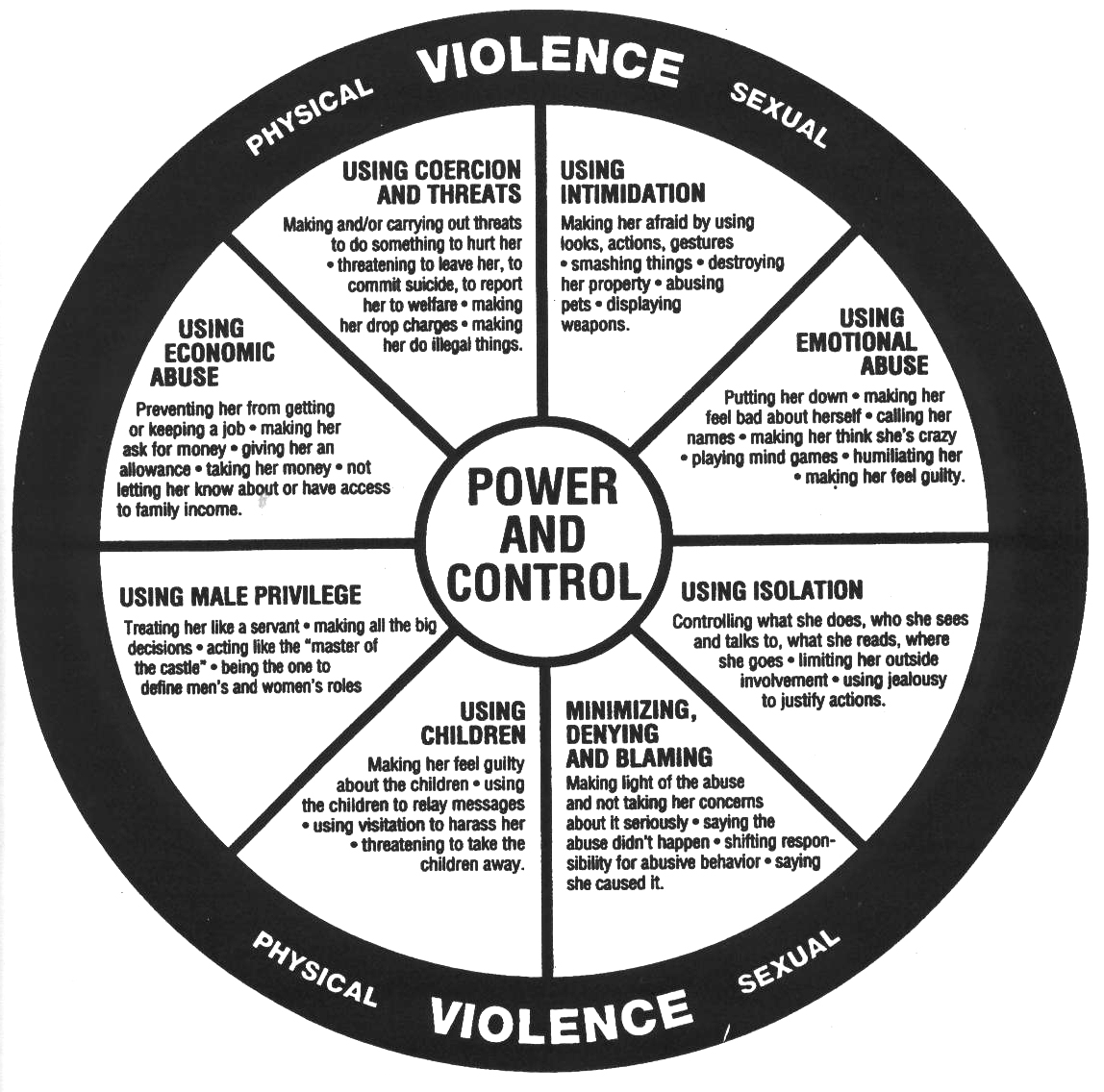
Violence comes from POWER and CONTROL, see below the 8 categories that constitute family violence

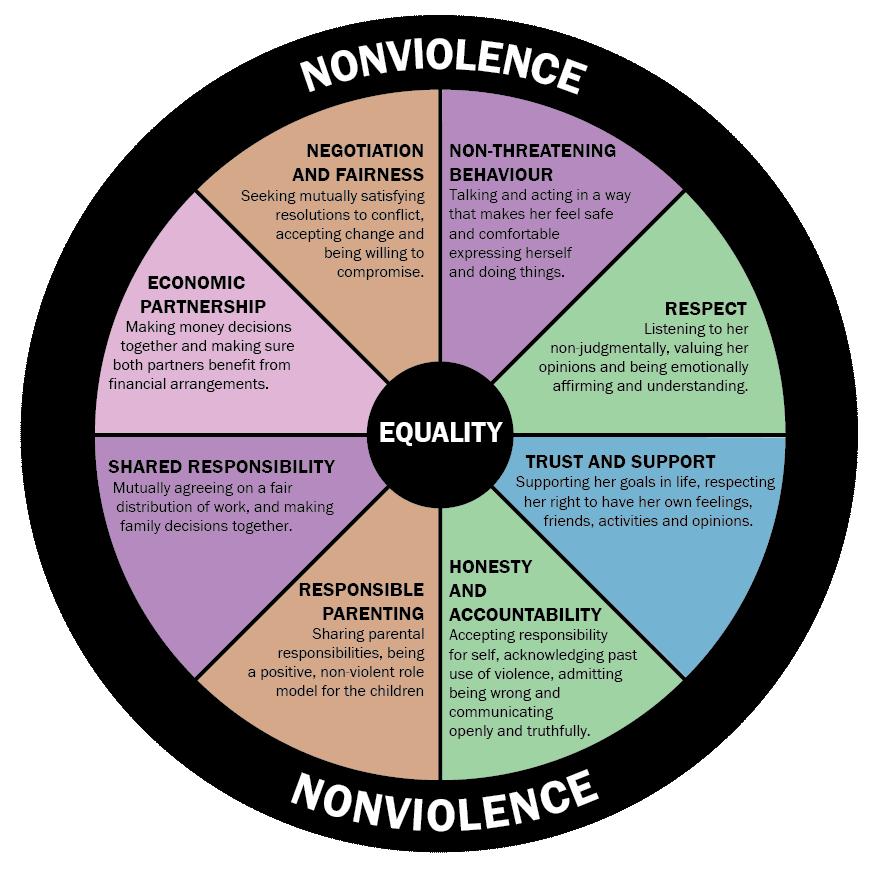
The Men’s Behavioural Change Programs is for men who want to stop using violence in the home and concentrates on teaching skills and providing tools to treat their family members with EQUALITY. See below the EQUALITY wheel that every family member deserves to feel.

Ifyou know you are using any type of violence, intimidation or coercion in the home, please get help.

Google MBCP nearest you. Some of the organisations that provide MBCP are:

Relationships Australia
Heavy M.E.T.A.L Program
FamilyCare
Lifeworks
Anglicare

Also call the following help lines that can talk about it with you and assist you in finding help:

  • Mens Referral Service 1300766491
  • Lifeline 131114
  • MensLine 1300789978

Or send us a message and we will assist in locating a program nearest you

When you just cant be there!

If you’re separated or divorced and don’t have a good access arrangement, this might help you stay better connected.

Missing your child and feeling like they’re missing out on you is a heavy weight to carry.  Kids are resilient and I found that if they are loved and cared for at both houses then they grow up stable. That doesn’t help the feeling of loss and grief that a Dads have to bare during the times they are absent.

One area that I have always been interested in and a keen participant is…keeping in-touch in between the times you are together and letting my child know that they are top of mind even if you can not be together for a week or two?

I found a great way to keep in-touch during the absent times and it became a bit of a hobby.

Wherever I happened to be, if there was a card shop or newsagency, I would always walk in and look for a card just to say “hi” There are some really nice and creative cards on the market, there would always be a different card that I thought my child would like. Over the years there would have been shoe boxes full of cards that I had sent and I doubt that I ever doubled up on the one card 🙂

Kids like to get mail from the postman, it makes them feel special

I would send a card once a week, the first card I would post just after my access visit as it would take a day or two to arrive. I would write simple things about the fun we had that weekend and how much I loved doing things together and sign off that I loved her.

The card on the second week would simply talk about how is her week going, how is school? and I am looking forward to the weekend and will pick you up at normal time.

I never mentioned  any comment about missing her as I did not want her to feel sad in any way, I made the card always happy, positive and upbeat.

You can get personalized stickers with your initials to seal the back of the envelope or better still both initials or an emblem that they’ll know instantly the card is from you. Click here for a supplier

Have you guys tried that or what are some of the other things you’re doing?

This post was first published in 2012 and updated in 2017.

xox when they need rescuing

I recently read an article about having an TEXT word if your children are ever in a spot they feel that they can’t get out off and need “rescuing”.

The article was very good but the plan they were using was called the X Plan. The idea was to send an “X” if they needed an out to a situation they found themselves him.

The issue with an X is that if I got this during the night I would just think my daughter was sending me a kiss. I wouldn’t jump out of bed, and head to rescue her, I would probably just send back a “x”.

The idea behind this methodology is to keep your children safe if they feel they are out of their depth or find themselves in a spot they can’t get out of.

I spoke to my daughter about these situations you could find yourself in, such as:

  • Being with a group of boys that you feel are not respecting you or your girlfriends
  • Being offered drugs and the people you are with are not accepting no
  • People you are with are drinking more than you feel comfortable with
  • The boy you are with wants to have sex and he is not accepting no
  • You’re in a aggressive situation and feel you cant leave on your own
  • Have found yourself with strangers and you feel uncomfortable with them for any reason
  • You feel trapped and find it difficult to get way from any harmful situation

I also discussed to be assertive and confident with your decisions but if that is not working then you need to send me a sms with XOX (a little like SOS). This is a safe-plan and using some letters that she would not normally use. I get all the x’s but never a xox, so we decided that was a good sms. You work out the best sms code that work for you too 🙂

If and when I received an sms, I would call the her phone immediately and say…

Hi, Something has happened with a family member and I need to come and get you. I will tell you more about it when you are in the car. Where are you, I am on my way.

If the location is not the location I was expecting her to be, I am happy for her to tell me as little or as much as she wants to. I am just happy that she is away from a situation she believed was harmful.

Encouraging your kids to keep a journal

Keeping a diary is something of a dying art among the youth of today. Social media posts have largely replaced the angsty diary entries scribbled out by teenagers of times gone by. This is a great shame, as journaling can be very good for kids. Here are a few of the benefits of journaling for young people:

  • Journaling allows self-expression in a non-judgemental context. Social media posts tend to be open to peer scrutiny and judgement. Diary entries, however, can be private and free. Which is very important.

  • As a method of free expression, journaling allows children to work through their feelings and experiences, thus learning and developing from them.

  • Journaling is a way of processing and healing from negative feelings and experiences – things which aren’t uncommon during puberty! Journaling is so powerful a mental health aid that it’s commonly recommended as a form of therapy by mental health professionals.

  • Journaling helps children to develop their creative side.

  • Journaling helps children to develop their observational skills, their powers of perception, and their intuition.

  • If read back through, journaling can provide a degree of self awareness which can be very helpful both in your child’s personal development, and in their social development.

All pretty good, no? Journaling is not for everyone, and some kids may find it too much of a tiresome chore to get anything out of it, but some kids may really flourish under the influence of a journal! So how can a devoted dad ease the phone from his kids’ hands, and replace it with a pen? Here are some suggestions…

  • Provide stationary they like. More than a few people have been brought to the joys of journaling through a love of good stationary…

  • Write a journal yourself. Kids are instinctive mimics of their parents, and will often feel drawn to the things you do.

  • Don’t nag about the journal – this will turn it into a chore, which makes creative free expression (i.e. the good stuff) far less likely to occur.

  • Introduce kids to diarists or diary-form literature that they may like, or show them films in which a character prominently keeps a diary. These aren’t hard to come by – it’s a popular creative form!

  • Leave them to it. The best journaling tends to occur in solitude, and often concerns private matters. Don’t look over their shoulder, and DO NOT read their journal – unless you have very serious cause for concern!

The top pain points of separation

loosing friends like rates leaving a sinking shipThere are so many individual things that cause pain after separation.  It sometimes feels like your stuck on a emotional roller coaster. I’ve talked before about ways to “SELF CARE” during these years, but when I think about what it is that causes the downs, there is a top 4 that seems to be ongoing and are a little more sticky and prickly than some of the others. I would be interested in knowing if your pain has been the same as mine?



Below are my top 4 things that caused me the most pain after separation, and I have included what I did about it.

1. Grieving the loss of your children
This is the biggest pain point.  Feeling of loss, missing, guilty, can not guarantee their security 7 days a week, part time dad, daily contact, The feeling that we are no longer as important in their lives all brings feelings of grief that continues to plague your thoughts. It is important that these emotions are worked on. The feeling of loss will never leave, it is something you learn to live with and it will always be a dark cloud that follows you around.

What I did about it:  I came to realize that I am their 100% dad 24/7, even if I am not living with them. It is easier to cope knowing that it’s true. I read once, that they don’t have a dad – only when you stop being their dad. I thought about that and knew they have a Dad. Emotions are something that I am constantly working on. I surrounded myself with people (a person) who is positive. Keep a good home so that I feel good about my contribution to the children, work at co-parenting with their mother as it is easier for everyone if you can get along. I worked on ideas for keeping in touch so that the gaps between visits weren’t silent, There has been a few posts written to help you with this, here is one: https://www.dadsonline.com.au/when-you-just-cant-be-there or another is this: https://www.dadsonline.com.au/card-hug

2. Reduced finances
Juggling bills month to month. You paying your share for the children but then 100% of your new housing and living costs and everything associated with it. Before separation, rent, mortgage, living expenses, holidays, children’s clothing etc were generally a shared expense but now it requires much stricter budgeting as you end up paying for much of this on your own. Being separated brings some extra time on your hands when the children are not with you but you do not have extra funds to provide extra activities. Gym memberships, keeping up with fashion, holidays all take second place to surviving month to month. A study was conducted and found that men appeared to be generally ‘unaware of and unprepared for separation.

This can mean that men do not approach their finances as an important factor in maintaining a positive parenting environment i.e. doing a budget will help you not spend more than you earn.  This is critical for your health and well-being and this is important for your children.

What I did about it:
The first thing I did was to complete a budget, I found a good one here: Budget Planner. I was honest with myself and made a decision to live within my means, you have too. You will or would have lost friends already, so your social life is diminished (more on this in No. 3) which in it’s self means you will not go out as much as your did before. I cancelled my Gym membership, cancelled Foxtel, I called my bank and spoke to the department that managing credit cards and I had my credit card interest rate reduced from 28% to 5% just by asking, this helped me to reduce debt.

I started taking a lot of notice how I used water and electricity too. Life sucks for quiet a while but there are many things that you will find enjoyment with that don’t cost money. Cutting back enabled me also to have a little savings.

There is always something that comes up that needs me to put my hand in my pocket, I have found that saving and cutting back has reduced the stress a little when bills come in or the new pair of runners or school uniform needs replacing.  If you feel you need urgent help to sort out your bills and prepare a budget, you can call 1800 007 007.  This free hotline is open from 9.30am – 4pm Monday to Friday.  When you call the number you will automatically be transferred to the phone service in your state where a financial counsellor will help you.

3. Loss of friends
Friends will choose who they want to be friends with after you separate, you will need to be prepared to loose many. Your guy friends will side with their wife or girlfriend because that’s life. Its easier for them to dump you than it is to argue with their wife about it.

Some reasons why you might lose friendships are:

  • They judge you as not being an honest person and having same values
  • They believe you brought this tough time onto yourself
  • There own relationship is not great and you could be contagious
  • They choose who they will support, you or your ex (even if they have been your friend)
  • You are now “John Doe” the separated guy and they are not sure how to relate to you
  • You now have different interests and priorities and they just don’t relate
  • A single dad just does not fit in with their idea of a friendship group

Whatever the reasons, some friends will leave you like rats leaving a sinking ship!

What I did about it:
I eventually focus on the positives, get out and spend time on yourself.  In the past you have probably had friends you would not have chosen, now you can choose exactly the friends you want to spend time with. I don’t think there is anything wrong with dropping out for a while and just hanging out with yourself, in some ways it can be quite therapeutic to find yourself again. So long as it is not forever (as some fall into that trap of hanging out there and never leaving) finding new friends can be uncomfortable but you need to feel the fear and do it anyway.

4. Work Life Balance
I absolutely believe that separation stalls peoples career’s (both Dads and Mothers). Purely from the distraction and commitment that needs to be exerted as a parent you can not put your energy  into a career equally – something has to give? and in my case it was not going to be the time I spent with the kids.

My children are now getting a little older and more independent that allows me to dedicate more time to my job which by default helps you move forward in your career. However whilst they were growing up I thought the last thing they needed is a family breakdown and a father who would rather spend more time at the office than with the them.

Company do say that they are family friendly but they also need you to get the job done and will tolerate a couple of nights leaving earlier but when promotional opportunities come around you could be over looked. Purely due to time restraints.

What I did about it:
I just had to juggle work and life!  it makes you time poor and stressful at times. I used to start work at 9am and at leave work at 5pm on the dot a couple of nights a week, be very organized in the mornings and get up to make breakfasts and lunches and make sure everyone was washed and dressed ready for school so that I was not late to work.

Some dads I know just could not be able to have the children during the week due to work demands, it makes me sad to think that but i know it is a reality.  It throws all the weekly parenting back onto the mother causing everyone to be disadvantaged and time poor. Time does heal and as the kids get older it becomes easier for all.

You just have to be in the game, put the kids first, make intentional efforts to parent them and make a home for them.

It’s a fact that everyone loves babies that is as long as it’s not theirs.

Its a fact that everyone loves babies that is as long as its not theirsBabies may look like little bundles of happiness but that’s as long as they don’t throw a tantrum or wake you up in the middle of the night every day, testing your patience to the very limits. Here we have noted down some of the pros and cons of having a baby which you can read to realize how big of a deal having a baby really is!

The Pros

You can leave behind a legacy

Probably the best benefit of a baby is that you have someone to carry on your legacy. For most families having a baby is assuring a legacy and taking part in shaping how the next generation is going to be like. Raising a child watching it grow and become a contributing member of society because of the morals and values that you’ve taught makes any parent them happier than they can imagine. But at the same time if you can’t be certain what kind of individual the child will grow up to be and whether you can provide the right guidance for raising a child.

It strengthens family relations—In some cases

For most couples a baby is the embodiment of their love they have for each other. It strengthens their bond as husband and wife as well as bringing the whole family closer. But keep in mind having a baby doesn’t make everything magically “ok”. If you feel like your marriage has already lost its spark having a baby can pretty much make the entire situation worse than before.

A baby makes your life more meaningful

Having a baby means that you have to make someone else your top priority since you no longer will be responsible for only your life or your spouses. A baby is the most fragile being which needs the undivided attention of both partners. The role of a parent starts but never ends even 20 or 30 years down the line. Becoming a parent can also enable you to change yourself for the better, give you the motivation to overcome negative aspects of your personality and enhance the positive ones.

The Cons

It costs more than you can imagine

A major aspect of having a baby is providing for it. Most couples decide on having kids without thinking of the financial responsibility they entail. Raising a kid can cost some serious money and the need of more money only rises as the child grows older. Just by imagining the cost of a single roller or crib you can begin to realize how much it will actually cost you and whether you can efficiently provide that kind of money!

You have no time for yourself

After or before having a baby the entirety of your time will be spent on taking care of it. A baby will cry it’s lungs out to get your attention, not just once but frequently throughout the day. Since a child is so fragile it will require your constant attention, leaving absolutely no time for you to spend on yourself or hobbies.

The chances are after having a baby you won’t be able to have a decent bat or fancy meal for a while because as soon as you leave their side, the baby will start crying forcing you to come back to it. Things only get more hectic when they learn how to talk and walk. This is the point where they start asking a lot of questions doing the most stupid things imaginable, thus requiring even more of your time.

Say goodbye to your current relationship

Parenting is a full-time job that you have to do for the rest of your life. Juggling your job as a parent with your actual job as well as meeting the family’s needs will not just tire you out but can cause you to lose the small amount of time you had to socialize with friends and family! Most couples even reach a point where they become strangers to each other and grow distant from one another in the presence of a child. There’s not a single doubt that raising a child can have its own benefits but that only applies as long as the parents are prepared but for those parents who are unaware and unprepared for the challenges of being a parent having a baby will lead to major distress and confusion and sometime the couples might even have fallout!

The Bottom Line

After all the glam and honeymoon most couples find themselves in a state of stagnation. Some couples decide to have a baby to reignite the flames of passion for their marriage and some remain childless and cherish what they have. But there’s no denying that inexperienced and unprepared parents do a lot more harm than good by having a baby! They need to thoroughly consider what having a baby means the commitment required and how they need to raise it.

Want your house to smell amazing?

Want your house to smell amazingWho has sweaty gym gear hanging around waiting to be washed, work boots, shoes, school bags, dogs, cats, rabbits, last nights stale food, yesterday beer smells, smelly drain or all of the above, then this video is for you… Its a good project to get the kids involved in. Let us know if you have another idea or if this worked for you? it did for us 🙂

Getting your child into the active habit of completing their homework

studdy buddy

Study Buddies can get positive results

It can often be a struggle to encourage your child to complete a set amount of time of homework and revision hours weekly, as it often feels like a fight over control. You feel as a parent you should be guiding them to sit down and study whereas they feel they are now needing independence and should be able to choose when they do themselves – which many of us must have noticed does not always go as according to plan with younger children.

You may have noticed some of the ways that your children try to hold onto their control by sometimes doing their homework but not handing it in, doing it in sloppy handwriting or by just not studying carefully for their tests. In return when this happens parents feel more frustrated and push, punish, argue with their children even more to try and persuade them to complete their homework.

One of the first things you need to do is take a step back and try to guide your child instead of trying to control him/her. Children are motivated, they do want to impress you however when you show signs of anger and frustration you ultimately end up scaring them and pushing them away.

You need to ask yourself what has worked in the past, think about a time where your child has completed their homework well without any fussing or hassles. Was there something different about that situation, what could it have been that made it work? Perhaps you were sitting with your child in the same room and were available to answer their questions instead of being tuned out on your smartphone. Or maybe the TV was off and younger siblings in a different room which meant they had minimal distractions. The best way to figure this out is by speaking to your child directly – ask him/her what motivates them to work and trust their answer, go with it for a few days and see if that truly does affect his study outcome in a positive manner.

Another way to encourage your child to complete their own work is by stopping arguing with them over it every day. If they are a little older and mature then try taking a step back; let the homework stay between the teacher and the student. Once the student starts to face the repercussions of their negligence in revising and completing set work then they will have no choice but to complete their work or face further punishments from the school. Your sole job as a parent is to help your child do his job, make a better safer environment at home with less arguments and they will naturally lean towards completing their work.

If you and your child prefer when you sit with him/her to help them study and it makes you tense, then you both can take a short break. You don’t need to do thirty minutes of straight uninterrupted study session; no one is watching or grading your child for this. What matters is the quality of the work they complete and how well they learn the topic at hand.

One of the most effective ways to improve your child’s learning and routine is by setting necessary structures in place. It has been scientifically proven that when you do the same type of task at the same time and place regularly you will learn and memorise more than if your surroundings and task were to keep changing. Make a public area of your home such as the living or dining room a study area for your child so that you can also keep an eye on them and they can easily reach you if they need assistance, and keep the bedroom as a place of rest at the end of a busy day so they don’t feel stressed at night. Another effective technique many parents have found is that when grades are falling, minus the screen time such as TV, Game Consoles and smartphones so that your child can concentrate more on his work and understands they can then do the leisure activity of their choice as a reward once their work or target has been met. You should also make your child understand that weekend activities and meeting up with friends will only occur once homework and other priority tasks have been completed. These methods will definitely assist your child in making better decisions and improving their time management skills.

As a parent we need to understand that we are the first role models to our children’s eyes. Don’t over focus on what you think is best for your child, take a step back and think about what your own personal life goals are and what ‘revision’ you need to get done to achieve these goals. By modelling your own persistence and perseverance to achieve your own goals you are setting an excellent and inspirational example to your child also.

If your child is a little older, perhaps have exams coming up, then the idea of inviting over a study buddy can also give a positive outcome. This is simply where another friend of theirs who is in the same class studying for the same topic can come over and study with your child. This method allows for you to also supervise from a distance and give your child some companionship on their level, they can discuss together what they have been taught and their answers on the questions set by their teacher.

Once you can get yourself and your child in these healthy habits you will be sure to notice a positive change in their attitude and method towards work. Improving their time management, making them feel secure and comfortable in their own home and being available to assist and answer their concerns will undoubtedly turn them in better more structured young adults.

Become great at parenting

I remember when I first separated, I didn’t have all the parenting skills needed to be a great parent.  I felt I needed to put some time and focus into learning a few things.  I also had the issues of a busy career which became in someways second place to my new role as a parent.

If I wanted to become great at parenting, something has to give.

I definitely valued and appreciated my career and what it provided.  Don’t get me wrong I kept doing a good job at work but shifted my drive from climbing the corporate ladder to climbing the parenting ladder.  There were some nights that I was free so I stayed back at work to keep on top of things, but I needed to get out of work at 5pm a couple of nights a week and start at 9am instead of 8-8.30am.  I was able to do this by having an understanding company and boss.   I also needed to slow down my social activities, and be more on my game as I found parenting full time requires a lot of effort.

All of my available time was dedicated to keeping a good home, making the kids top of mind and providing a healthy and stable home.  This included making sure that they have their own rooms set up as they like it so it felt like a real second home.  I made sure that there was always good food in the fridge/pantry when they stayed.  I had activities planned and we went on outings with family and friends and just ourselves, there was routine and they were involved with their grandparents and extended family when possible.

We continued with homework just like “normal”, I got involved in school activities, just like normal,went to parent teacher meetings and got involved in their hobbies and sports, just like normal, i think this is the key.

We often did the shopping together and if I needed to go and pay some bills, they came too.  It was all about making their life with me as normal as possible.  Things became easier and parenting took less time.  It became second nature, it allowed me to spend a little bit more time on the things I wanted to do with my life.  I had achieved a happy functional home life for the kids and things started sailing along.

After some time (maybe a year or so when things settled and became consistent again for the kids) I could step back into work a little more but still keep the kids top of mind.  My decision to focus on becoming great at parenting has absolutely been the best decision I have ever made.


Why are you being so rude to me…I dont know?

Why are you being so rude to me...I dont know I’m learning very quickly about moody teenagers and trying to be tolerant, but I want to jump in a time machine and go forward 10 years because this is hell!
It seems like I cannot do or say anything that is right and any advise or solutions given feels like a lecture to them.

I understand that there are lots of hormones going on, our school had a night for year 7 parents and covered off areas around dealing with this change.

How to cope with teenage children:

  • Don’t buy into schoolyard arguments, the kids will work it out
  • Be a listener and be there but don’t try and solve their problems
  • Be encouraging and be there but let them work things out in there own time

Adults brains apparently have a hormone called THP which has a calming influence, In our teenagers this same THP heightens anxiety – of course it does 🙂 . I keep reminding myself they are going through many new experiences and having to cope with new challenges like: hormonal change, body changes, developing identity, pressure from friends, and a developing sense of independence.

I am sure they don’t like the moods either. I asked her once..

Why are you being so rude to me? She replied “I dont know”?  

So I just left it and I understood she wasn’t meaning to be rude and she didn’t like it either. I could tell she knew it was wrong.

These reminders are my savior, Thank God there are times where she is calm, happy, respectful and loving otherwise I would go completely out of my mind! So I am just trying to roll with it, provide support and stability. Still setting ground rules for respect as I expect her to be respectful to all people. I pick my battles, remain calm and try to redirect the negative behaviour.

A couple of tips in this areas could be:

  • Pick your battles. If your teenager is basically behaving, ignore minor annoyances such as shrugs, raised eyebrows, or bored looks.
  • Sometimes, teens may be inadvertently disrespectful. (Again, their brains are developing.) Calmly ask about their intention — for example, “That comment came out sounding pretty offensive. Did you mean to behave rudely?

I know its a stage that lots of kids go through, she is a beautiful girl and has a kind warm heart. If she is rude and I do discuss it, I make sure I talk about the behaviour not the person. I’m always  trying to affirm her worth as a person even as I explain why her behavior was unacceptable.

Through the next few years (OMG), I’ll always be involved and interested in her everyday life and be interested in her sport and activities. Even during the times when she is unlovable, I will still give hugs, words of praise, little note in her lunch box with words of love often, because they need it and want unconditional love to help them get through it.

I came across this YouTube video and it reminds me that sometimes they DON’T KNOW why they are being rude and we shouldn’t get upset or take it personally.

Will your teen choose to take drugs or alcohol?

Will Your Teen Choose to Take Drugs or AlcoholAt some point during their teenage years, almost all young adults will be given the opportunity to try drugs or alcohol. Some teens will resist the opportunity that is presented to them, whilst others will be unable to give in to temptation: The problem is though, that for children with addictive tendencies, what was intended to be a one off thing could well lead to a lifelong addiction problem. The best course of action, then, is to encourage your teen to always say no: but what makes one teen more likely to be able to resist temptation than others?

Some teens are simply better equipped to stand up to their peers and say no; often those teens with the ability to do this have other healthy coping skills when they are facing times of adversity, such as exercising regularly, eating a healthy diet, and attending positive sports and social groups such as their school band or other organised groups and societies.

Unfortunately, the drug and alcohol industry is full of successful marketeers who make the idea of taking drugs or drinking alcohol seem glamorous and ‘cool’: many teens are susceptible to these kinds of messages. Drug and alcohol use are still widely shown in movies, in music videos and on TV, which can sadly normalise their use amongst teens, leading teens to make adverse choices.

Exploration is an important part of being an adolescent, but uncontrolled exploration of drugs and alcohol can be very dangerous and potentially life destroying: this is something it is important for parents to attempt to control.

To find out more about the reasons why teens may choose to turn to alcohol and drugs, you can read a full version of this article here.

Thank you to Mel Gale for her guide.