
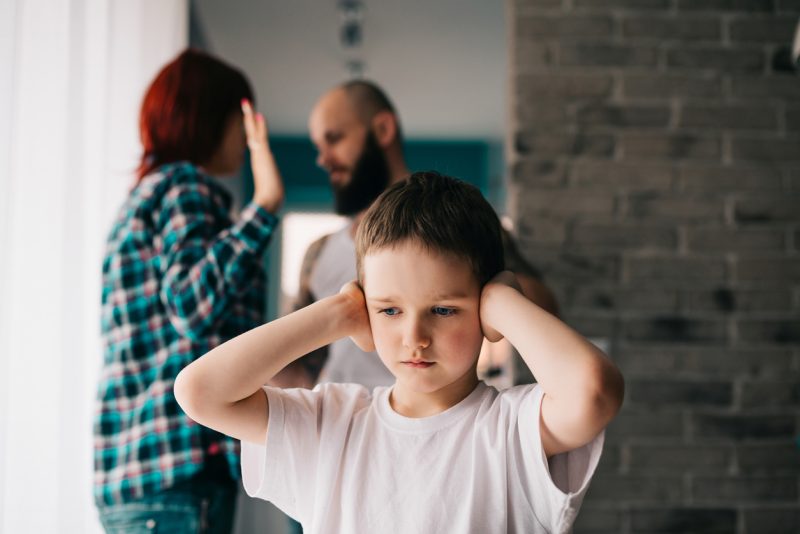
 When people think of domestic and family violence, they often think of how much it hurts the adult victim. It’s true that domestic and family violence is most often violent, abusive or intimidating behaviour. But what you may not realise is that children also experience domestic violence and this affects their physical and emotional health and wellbeing. Growing up in a family where there is a perpetrator of Domestic Violence can cause serious long term mental health issues for the children of that home.
At Lifeline, Crisis Support Workers often talk to people who call up with anxiety, they are homeless, have been seeing a psychiatrist for their whole adult life, drug and have alcohol or drug addiction or both, depression, self harm, thoughts of suicide and social behavioural problems just to name a few!
Their life has been and is in crisis and there always seems to be a common threat to their background – they have grown up inside a home with Domestic Violence &/or Coercive Control towards a parent or even towards them.
Lets look at the Lies and the Truths about Domestic Family Violence…
LIES
- It doesn’t effect the kids
- The children will forget about it
- The children are too young to understand what’s going on
- Kids effected by DFV will always bounce back and get over it
- Talking to kids about it will not help
- Talking to kids about it will only confuse them
- The perpetrator is good to the kids so they’ll be ok
- So long as the children are not hit they’ll be ok
- It won’t affect their education and development
- It’ll teach the kids to be strong and tough
- Life’s alway good when you are a kid
- It’s part of our culture
- It’s normal and acceptable
- The violence is a way to show love
TRUTHS
- It happens in all communities and at all levels of society
- It can seriously harm children physically and emotionally
- It can impact on babies and infants
- Kids are affected even if they don’t see the violence
- It prevents kids from feel safe
- It can interfere with a Childs developments and education
- It can affect a Childs relationship with other people
- It can give kids nightmares, headaches, stomach pains and regular sickness
- It damages a Childs self-esteem and confidence
- Children often believe its their fault
- It can lead to substance abuse in young people
- Children can mirror that behaviour in their adult life
- Talking about the problems with kids can help them
- Effects on a child are reversible with the right help and support
- There are services that can help children and families
Some useful Links
- Child Abuse Prevention Services
- The National Association for Prevention of Child Abuse and Neglect
- 1800RESPECT
- No To Violence
- Kids Helpline
- Lifeline
- SafeSteps
 Many children worry about what will happen to them when their parents split up, and it can be a big relief to them if the arrangements become clear and predictable early on. Working out a parenting plan as early and as quickly as possible serves many purposes such as it gets your children into a regular routine, you can have certainty around access, holidays, do we share in the buying of gifts and presents, do we share clothes etc.
 I was a little nervous, I just had to step up , plan and ensure it all worked. I very quickly got in the swing of things and it worked out well. The rest is history!
 When we were out and about, and it came time to take her to the toilet or maybe I needed to go? she came with me and simply buried her face into my shoulder when we walked through the mens to the cubical, Always a good time to try and get them to go too, even if they don’t feel like it. When she was big enough to go on her own, I would stand near the door of the female toilets and didn’t move until she came out. The wheel chair access toilets are gold!!






 You could not imagine how much importance your child puts on your promises i.e. when you said you would buy them that special gift, when you promised you would be there for them, there are times they know its boring for you but in the end it makes them feel secure and loved that you are there.
 By Peter J. Favaro, Ph.D. Author of Smart Parenting During and After Divorce.















New dad tips for parenting infants and toddlers
Parenting infants and toddlers is amazing, rewarding and frustrating and it can happen all in the same day.
Imagine being a toddler for just a minute…they can’t articulate clearly what you want, they are completely managed by a parent, given food that you might not like, dressed and changed multiple times a day and restricted to the confines of a play pen, bed or high chair.
All very normal and right but it can cause the child to occasionally throw a tantrum and its these moments we find the most difficult.
There are somethings dad you can do to help reduce the stress in your household and possibly make tantrums less frequent, such as:
Love is the first step
Not to many rules
Don’t bombard your child with to many rules, make your home child safe so they can crawl around where ever they want without being told “not’ to do or touch that. It can eliminate one frustration. Your child might start to get frustrated if you are saying “no” all the time, so look for many opportunities to say “yes”.
If you are getting a lot of “no’s” try not to react, simply repeat the request in a nice calm voice. Is there some way you can make what your’e asking your child to do that could be made more fun? All aged children prefer to do tasks that are fun and enjoyable.
Give them choices
If its changing into PJ’s and he or she doesn’t want to, try getting two out for them to choice which one they would prefer to put on. Same goes with going to bed, its always a trigger for pushback. Try getting two books and asking which one will we read tonight?
If there is a power struggle and we know there will be, you can use choices like “Its bed time, would you prefer to brush your teeth or put your Pyjamas on first?
Stick to a routine as if your life depends on it
Routines help children feel safe and secure. Because when you introduce things that happen the same time every day, things like waking up, breakfast time, lunch time, dinner time, cleaning your teeth, what time you come home from work, time for a snack or a sleep, it allows the child to trust you and they are left feeling emotionally secure to just play, explore and be a child.
Be a good role model
Set examples, remember you might not think your child is listening but I guarantee they are watching everything you do.
Teaching your infant or toddler new skills
Teaching them how to perform simple tasks like putting on a jumper, or putting toys away can be a great start. Start teaching them by talking through the instructions of each task whilst you perform them.
“ok Jimmy, lets pick up all the yellow toys and put them back in the box, see 1,2,3. Then we pick up the blue balls and put them in the box, 1 blue ball, 2 blue ball, 3 blue balls, into the box so they can rest for the night and it keeps the room clean and tidy. Why don’t you show me how you can pick up the pencils and put them in the box too?
Teach instruction on everything you do from the earliest age possible and before you know it, you will have a more ready to help child and less tantrums.
What tips or ideas have you got that you could share with other first time dads? Share them below in the comments box.