Children and Chores: What I’ve learned as a Father

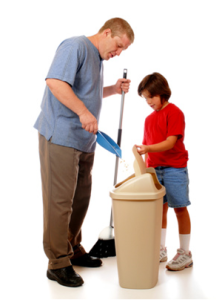
Kids and cleaningThere was one thing I was looking forward to when I had my first kid.  It wasn’t spending time raising someone to be responsible, nor was it having a new best friend to laugh and play with.  It was finally getting someone else to mow the lawn for me.  No more of my weekend time wasted pushing my lawnmower with the busted automatic drive, no more time fixing the bag that keeps falling off, and no more hauling the grass bags off to the bin.  That is all Dennis Junior’s job.

Okay, the real truth of it is that I didn’t start having kids to supply my own personal free labor force.  The fact is that I make my kids do chores for the same reasons any other parent does, which is to help teach them about responsibility, reward, and helping to better prepare them for the maniacal world of adult life.

I was raised in a fairly strict family environment and what that left me with was the lasting impression that I wanted my own family to be anything but.  It may have been a tough childhood but that doesn’t mean that it didn’t teach me some good lessons, and while not everything my parents made me do or discipline me for is what I plan on passing along to my kids, my goal was to take the best traditions that I know are good and mix them with some new methods with my own personal twist.

Of course, I have to give that most important of disclaimers “individual results may vary”, but you can just use my method of giving everything a try to see how effective it is on your firstborn, or as I like to call him, “practice baby.”

Make it a responsibility, not a punishment

When my firstborn was young, it was hard to explain the concept of pride to him.  It was something he grew to understand as I explained that how a person presented themselves was how they also presented their own self-respect.  I don’t mow the lawn because I like to, although I really do, because my wife wants nothing to do with yard work and I get some valuable me time with a beer and my iPod.  I mow it because I take pride in where I live.  I don’t want my home to look run down or have anybody judge my family as poor or lazy.

I explained to my children that this was why their rooms should be kept clean.  A clean room is a happy room.  I’m okay with a little clutter, because a little clutter looks lived in and feels like home, but when it starts to look like an episode of Hoarders is where I draw the line.

Participate, do not delegate

Notice I said “help us out.”  Don’t force your kids to do something you wouldn’t do yourself.  This has two negative effects, the first being that it makes a chore feel like punishment, the second being the job probably won’t get done right without your supervision meaning you’ll have to just do it right yourself.

Doing the chores with your kids is a great way to spend time and bond with them.  You can talk to them about their day (a three year old can have quite an interesting day), or sneak in a few life lessons (like why jamming a fork into an electrical outlet is a bad idea).

In traditional cultures parents spend a great deal of time with their children during their childhood teaching them valuable life skills.  There is a disconnect in western culture between chores, children, and how parents instruct children in these chores, with children “striking” on their workload.

Start early, make it routine, and encourage it

The best way to get kids to learn a habit is to start them when they are young.  If mini-you shows an interest in helping you pick up the laundry don’t discourage that behavior by telling them to sit down and get out of the way.  Let them help you out and slow down to their speed.

Kids are great at learning (some studies suggest that the contemporary child is smarter and quicker to learn than kids were decades ago), and when you encourage positive behavior they will naturally come to enjoy it.  Make it part of a daily routine and it will quickly become learned behavior.

Rewards

This is one of those tricky topics.  If you put a dozen parents in a room and ask them what the best type of rewards for doing chores should be, you’ll get about fifty different answers.  The best thing to do as a parent is offer a reward that is tailored to your kid.

What is important to remember though is that rewarding behavior only works until someone decides that the reward is no longer valuable.  If you give your kids money for chores and a sneaky relative outbids you at a birthday party, then suddenly your kids are going to start criticizing the value you place on their work.  If I thought of this situation as me at any job I ever had, and I questioned the value my company placed on me, I’d start looking for a new job.

This is why I for me, the most important principle I try to instill in my children is that of pride and self-respect.  I encourage them to do chores for the same reason that I do them.  Not because I want to, but because it is how I show how I care for myself, and how I care for us as a family.

The power of being present

Power of being presentIf you were to spend a lot of time with me a few years ago, you would have observed the serious and worry side of me. Today that side is still there but in a lessor degree because it gets replaced by a conscious effort to be present in the moment.

Those worries were varied, I could be walking around the supermarket looking for the diced tomato’s but instead my mind would be clouded with many troublesome thoughts all brought about from the complex issues around separation and shared parenting. I learned that our mind play games and we think about negative things that might never happen, in fact 95% of the time they never do.

Being present is one of the most talked about mental dynamics in spiritual life, and that it may be the single most important concept of living if your goal is to be happy and effective. In the absence of being present, we can live in a world of fear, anticipation, regret, anxiety and stress.

Our minds can take us back to the past, reminding us of painful times and our world of troubles, as well as into the future as it did with me, encouraging me to worry and stress.

I have learned to clear my mind and be present these days and i now carry less stress, not only for myself but everyone around me is happier. When your mind is present in the moment, we are less distracted with thoughts of what “might” happen or the negative intentions of other people.  We don’t get overwhelmed with negative reminders of hurtful experiences. Instead, when we are present, we simply get on with what needs to be done now, we are focused on the present moment.  If you are visiting a friend or you have your kids with you, you listen to them intently and with respect rather than allow your mind to wonder elsewhere.

It took quiet along time to get a handle on being present.  It is not something that I read then implemented the next day, it took practice,  but we all have the power to do it.  When our minds wonder from here to there, thinking about problems, becoming overwhelmed by thoughts of past or future drama’s. Its like we get lost in the content of our own thinking, and we don’t even realise it is happening, it just happens.

But i have learned and you can too that we have the power to recognise our own thinking when its taking us to a place we don’t want to go. When we do, we’re able to bring our attention back to the moment – to what ever we are doing or whoever we are with. With regular practise and when you can do this, you will notice that what ever your dealing with will be far less stressful.

Being present will reduce the stress you feel even if your handling a serious issue at that moment.

It is about consciously knowing how we can contribute or exacerbate the painful experiences in our lives by failing to recognise when our mind is taking us to a painful place. For example: We might be doing ok financially but are worrying ourself sick about saving for retirement.  Being more present is not saying don’t plan for your retirement but rather a way of moving through your life effectively without it ruining or magnifying the issue today.

My life today is easier, things that used to drive me crazy don’t so much nowadays, by practising being more present orientated, it has brought me peace of mind and less stress 🙂 have you been able to master this yet? let us know so that others can learn from your experiences too.


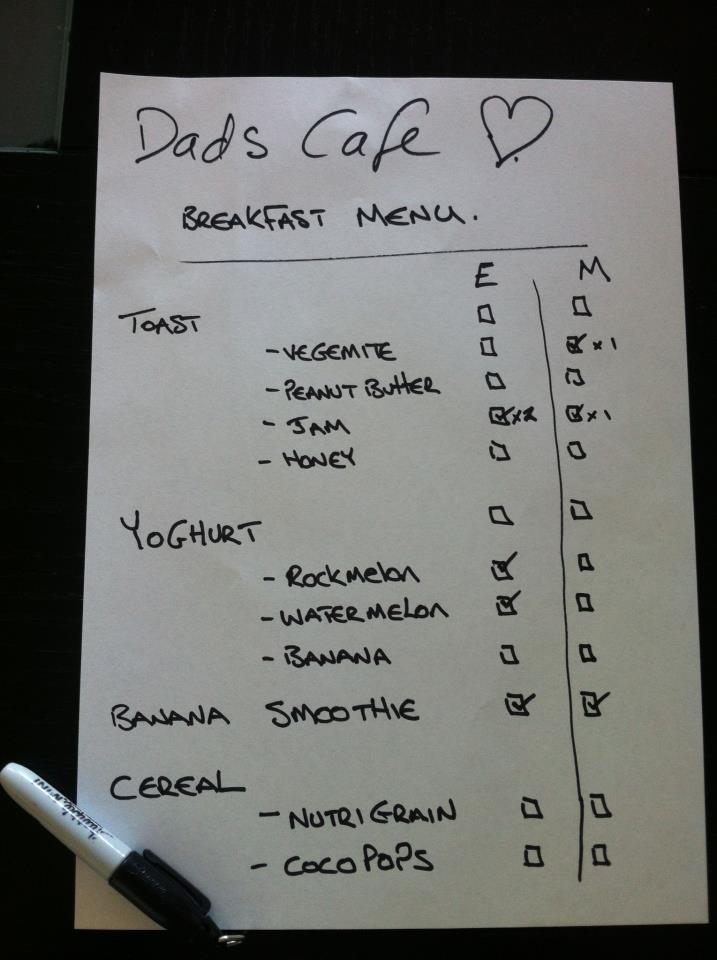
Dads Cafe Breakfast Menu

This is what breakfast looked like at our house this morning. Every now and then using an A4 piece of paper I draw up a menu similar to the ones we get in a cafe and we all get to order what we would like to eat. It’s a bit of fun as kids love to role play games and you can pretend you are a waiter. I just include on the menu what is available in the fridge and pantry at the time.

dads cafe menu

Dance dads choose well

Momentum Dance StudioOk, so maybe you have a child that dances around the living room as soon as they hear music on the TV. Perhaps your little girl or boy always dances down the street instead of walks. Or your boy just can’t sit still and has discovered he can spin on his head on your floorboards. Sound familiar?

Well, it’s time to admit it – you have a dancer in the house!

Like it or not, you have two options. Ignore it or embrace it. If you have chosen to embrace it (lets be honest – it was never really a choice) this article will hopefully help you to embrace it in the most positive and enjoyable way for both you and your child. Dance can be an extremely positive influence on a child not only as physical exercise but also for self expression, confidence and personal discipline.

Momentum Dance StudioIt’s no wonder that dance tuition in Australia is on the rise for both boys and girls. Thanks to television programs like So You Think You Can Dance, Glee and a string of dance based films in the cinema, many parents are going online to find a local dance school for their child.
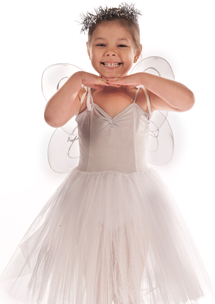
Dance schools can vary from one extreme to the other. When looking for the right school for your child you should be armed with some knowledge before you find yourself and your child in an awkward situation. Viewing your daughter on stage in less than appropriate costuming or your son grooving along to a song way beyond his years will make you cringe!

..”As a child psychologist, the sexualisation of children concerns me greatly. I was incredibly impressed and thankful that your production was so appropriate for children…”
Dr Sophie Reid, Child & Adolescent Psychologist, Kingsford
(Referring to Momentum Dance Studios UNSW)

Dance schools fall into two main categories, recreational or competitive. Depending on the level of interest your child has and what you want your child to achieve from this extra curricular activity will factor into your choice.

balcombe heights215A recreational school may be smaller in size and more personal for this exact reason. They are often owner operated and can cost a little less. Children can really be nurtured and made to feel special in this type of school. However, you should look for signs that it is run in a professional manner such as:

  • Accredited with a recognised dance institution such as Royal Academy of Dance or others
  • Operating on purpose built dance flooring to prevent injury and that they are insured.
  • All teachers should be Police Security Checked – it’s the law to work with children and many are not!

A competitive school is one that actively promotes and enters competitions or eisteddfods against other schools. They are often larger in size, can cost more (competition fees, costumes and pressure to do more classes) and a certain amount of student rivalry can develop. These schools are often a bit flashier. They will have a set uniform for class with their own logo that you will have to purchase from the school and be specific about the brand of dance shoes you just buy. A competitive school can still be a rewarding experience for your child particularly if the show great aptitude for dance, are naturally competitive or want to go down the path of professional performer.

A little knowledge can be dangerous right? No! You now know more then some of the parents sitting in that dance studio waiting room. Below are a few questions that are worthwhile asking and should be answered clearly by a good school and without hesitation.

  1. How much are classes? Believe it or not some school will not tell you this. Also avoid schools that want your account details or lock you into contracts.
  2. Can we do a trial class? This is a good option to see how your child goes however one class is not enough for your child to feel comfortable and confident in a new environment. Don’t be discouraged if it wasn’t a hit. You may wish to try for a term and give them a chance to make a friend and understand what is going on in the class.
  3. What performances are students expected to be involved in? Avoid schools that perform in a lot of shopping centres or festivals as this is purely to promote their own business and of little value to your child. Generally schools will perform once or twice a year.
  4. Are your teachers Police Security Checked? All adults working with children must hold a valid Working With Children Permit.
  5. Do students have to do exams? Many schools are accredited or affiliated with a large dance organisation such as BBO, EDTA, CSTD, RAD, Cecchetti. This isn’t a bad thing. It means that the school has a certain standard they aim for and students can work through the grades. However these qualifications are not valued outside of this organisation and are not really necessary. The exception we believe is RAD (Royal Academy of Dance) from the UK as this is the most recognised stream of classical ballet and students can work towards a teacher qualification and work internationally. RAD teachers are in high demand and paid accordingly. Exams in all other styles of dance such as Tap, Jazz, Contemporary or Hip Hop are not essential and just end up costing you more money.
  6. Do you have any scholarships or discounts? Most school will offer discounted classes if you do more then one or have siblings enrolled. Schools that offer scholarship demonstrate a genuine commitment to their local communities and are not just profiteers!

So there you have it! You are now officially a well informed Dance Dad.

Momentum Dance StudioDon’t be hesitant to question the intimidating dance school principal before you sign up. It’s much harder to move your child once they have settled into a class, made friends and adore their teacher. However, if you do observe that your child isn’t being exposed to the best practice in dance education make that move and it will pay off in the end and certainly avoid the cringe factor.


Happy Dancing!

Written by Natasha Swan, Momentum Dance Studios

Momentum Dance Studios was founded by Belinda Fenech and Natasha Swan, graduates from the University of NSW. Their studios in Kensington, Rozelle and Baulkham Hills offer recreational dance classes for children aged 3 years and up on Saturdays. For more information please visit www.momentumdancestudios.com.au

Momentum Dance Sudio

Developing our kids self esteem

self esteemHealthy self-esteem is like a child’s armor against the challenges of the world. Kids who know their strengths and weaknesses and feel good about themselves seem to have an easier time handling conflicts and resisting negative pressures. They tend to smile more readily and enjoy life.  These kids are realistic and generally optimistic.

In contrast, kids with low self-esteem can find challenges to be sources of major anxiety and frustration. Those who think poorly of themselves have a hard time finding solutions to problems. If given to self-critical thoughts such as “I’m no good” or “I can’t do anything right,” they may become passive, withdrawn, or depressed. Faced with a new challenge, their immediate response might be “I can’t.”

What Is Self-Esteem?

Self-esteem is similar to self-worth (how much a person values himself or herself). This can change from day to day or from year to year, but overall self-esteem tends to develop from infancy and keep going until we are adults.

Self-esteem also can be defined as feeling capable while also feeling loved. A child who is happy with an achievement but does not feel loved may eventually experience low self-esteem. Likewise, a child who feels loved but is hesitant about his or her own abilities can also develop low self-esteem. Healthy self-esteem comes when a good balance is maintained.

Patterns of self-esteem start very early in life. The concept of success following effort and persistence starts early. Once people reach adulthood, it’s harder to make changes to how they see and define themselves.

So, it’s wise to think about developing and promoting self-esteem during childhood. As kids try, fail, try again, fail again, and then finally succeed, they develop ideas about their own capabilities. At the same time, they’re creating a self-concept based on interactions with other people. This is why parental involvement is key to helping kids form accurate, healthy self-perceptions.

Parents and caregivers can promote healthy self-esteem by showing encouragement and enjoyment in many areas. Avoid focusing on one specific area; for example, success on a spelling test, which can lead to kids feeling that they’re only as valuable as their test scores.

Signs of Unhealthy and Healthy Self-Esteem

Self-esteem fluctuates as kids grow. It’s frequently changed and fine-tuned, because it is affected by a child’s experiences and new perceptions. So it helps to be aware of the signs of both healthy and unhealthy self-esteem.

Kids with low self-esteem may not want to try new things and may speak negatively about themselves: “I’m stupid,” “I’ll never learn how to do this,” or “What’s the point? Nobody cares about me anyway.” They may exhibit a low tolerance for frustration, giving up easily or waiting for somebody else to take over. They tend to be overly critical of and easily disappointed in themselves.

Kids with low self-esteem see temporary setbacks as permanent, intolerable conditions, and a sense of pessimism prevails. This can place kids at risk for stress and mental health problems, as well as real difficulties solving different kinds of problems and challenges they encounter.

Kids with healthy self-esteem tend to enjoy interacting with others. They’re comfortable in social settings and enjoys group activities as well as independent pursuits. When challenges arise, they can work toward finding solutions and voice discontent without belittling themselves or others. For example, rather than saying, “I’m an idiot,” a child with healthy self-esteem says, “I don’t understand this.” They know their strengths and weaknesses, and accept them. A sense of optimism prevails.

How We Can Help

As a parent we can help to foster healthy self-esteem in a child? These tips can make a big difference:

  • Be careful what you say. Kids can be sensitive to parents’ and others’ words. Remember to praise your child not only for a job well done, but also for effort. But be truthful. For example, if your child doesn’t make the soccer team, avoid saying something like, “Well, next time you’ll work harder and make it.” Instead, try “Well, you didn’t make the team, but I’m really proud of the effort you put into it.” Reward effort and completion instead of outcome.Sometimes, a child’s skill level is just not there — so helping kids overcome disappointments can really help them learn what they’re good at and what they’re not so good at. As adults, it’s OK to say “I can’t carry a tune” or “I couldn’t kick a ball to save my life,” so use warmth and humor to help your kids learn about themselves and to appreciate what makes them unique.
  • Be a positive role model. If you’re excessively harsh on yourself, pessimistic, or unrealistic about your abilities and limitations, your kids might eventually mirror you. Nurture your own self-esteem and they’ll have a great role model.
  • Identify and redirect inaccurate beliefs. It’s important for parents to identify kids’ irrational beliefs about themselves, whether they’re about perfection, attractiveness, ability, or anything else. Helping kids set more accurate standards and be more realistic in evaluating themselves will help them have a healthy self-concept.Inaccurate perceptions of self can take root and become reality to kids. For example, a child who does very well in school but struggles with math may say, “I can’t do math. I’m a bad student.” Not only is this a false generalization, it’s also a belief that can set a child up for failure. Encourage kids to see a situation in a more objective way. A helpful response might be: “You are a good student. You do great in school. Math is a subject that you need to spend more time on. We’ll work on it together.”
  • Be spontaneous and affectionate. Your love will help boost your child’s self-esteem. Give hugs and tell kids you’re proud of them when you can see them putting effort toward something or trying something at which they previously failed. Put notes in your child’s lunchbox with messages like “I think you’re terrific!”Give praise often and honestly, but without overdoing it. Having an inflated sense of self can lead kids and teens to put others down or feel that they’re better than everyone else, which can be socially isolating.
  • Give positive, accurate feedback. Comments like “You always work yourself up into such a frenzy!” will make kids feel like they have no control over their outbursts. A better statement is, “I can see you were very angry with your brother, but it was nice that you were able to talk about it instead of yelling or hitting.” This acknowledges a child’s feelings, rewards the choice made, and encourages the child to make the right choice again next time.
  • Create a safe, loving home environment. Kids who don’t feel safe or are abused at home are at greatest risk for developing poor self-esteem. A child who is exposed to parents who fight and argue repeatedly may feel they have no control over their environment and become helpless or depressed.Also watch for signs of abuse by others, problems in school, trouble with peers, and other factors that may affect kids’ self-esteem. Encourage your kids to talk to you or other trusted adults about solving problems that are too big to solve by themselves.
  • Help kids become involved in constructive experiences. Activities that encourage cooperation rather than competition are especially helpful in fostering self-esteem. For example, mentoring programs in which an older child helps a younger one learn to read can do wonders for both kids. Volunteering and contributing to your local community can have positive effects on self-esteem for everyone involved.

When promoting healthy self-esteem, it’s important to not have too much or too little but “just enough.” Make sure your kids don’t end up feeling that if they’re average or normal at something, it’s the same as not being good or special.

Finding Professional Help

If you suspect your child has low self-esteem, consider getting professional help. Child and adolescent therapists and counselors can help identify coping strategies to help deal with problems at school or home in ways that help kids feel better about themselves.

Therapy can help kids learn to view themselves and the world more realistically and help with problem-solving. Developing the confidence to understand when you can deal with a problem and when to ask for help is vital to positive self esteem.

Taking responsibility and pride in who you are is a sure sign of healthy self-esteem and the greatest gift we can give to our child.

We would like to acknowledge Kids Health for this content.

Protecting our kids from social media hackers

hacker safetyThe hacking of mass accounts on a social network is something that seems to be happening a great deal recently, with LinkedIn being the latest victim, after having 6.5m of its users passwords stolen.

Prior to LinkedIn, Twitter suffered a similar hack, and Facebook did too.

Social media profiles have become the target of social media hackers who use that data to further spread their maliciousness or gain access to your more sensitive data. It is always worth remembering that you can become a victim at any time. Not a day goes by when we don’t hear about a new hack, and with 55,000 new pieces of malware generated a day, security never sleeps.

With the latest security threat to LinkedIn fresh in our minds, here are 10 key social media security tips.

1. Think before you post! Status updates, photos, and comments can end up revealing more about you than you intended to disclose, and you could end up feeling like some silly politician as you struggle to explain yourself.

2. Think twice about allowing applications that request permission to access your data. You will be allowing an unknown party to send you email, post to your wall, and access your information at any time, regardless of whether you’re using the application. Before you decide if you want to allow the application access, make sure you know exactly what the application is!

3. Don’t click on short links that don’t clearly show the link location. With URL shorteners like bit.ly (and many more) are becoming increasingly common, it’s easy to forget that such URL’s can also be used by criminals to dupe you. Criminals often post phony links that claim to show you who has been viewing your profile. If you’re unsure about a link, you can test unknown links at SiteAdvisor by simply pasting the link into the “View a Site Report” form on the right-hand side of the page. Alternatively, if you use Hootsuite, you can see the extended URL or a shortened link by simply clicking the ‘+’ sign next to the shortened URL.

4. Beware of posts with subjects along the lines of, “LOL! Look at the video I found of you online!” When you click the link, you often get a message saying that you need to upgrade your video player in order to see the clip, but when you attempt to download the “upgrade,” the malicious page will instead install malware that tracks and steals your data.

5. Geolocation apps such as Foursquare share your exact location, which can also let criminals know that you aren’t home, so reconsider broadcasting exactly where you are. Remember, apps like Foursquare still allow you to gain check-in points without having to disclose your location on your Facebook and Twitter accounts.

6. Always use an up-to-date browser. Older browsers tend to have more security flaws, and it is very simple and quick to update your browser to the latest version.  Firefox is becoming the preferred brower to use when surfing the net, you can download it for free here: http://www.mozilla.org/en-US/firefox/new/

7. Choose unique logins and passwords for each of the websites you use. Yes, it’s a bit of a hassle to have different passwords for EVERY site you use, but it’s the best way to limit your exposure if (and probably when) a particular site you use gets hacked. I’m a big fan of password managers, which can create and store secure passwords for you.

8. Check the domain of the website to be sure that you’re logging into a legitimate website. So if you’re visiting a Facebook page from a link in an email, make sure the URL of the site is actually ‘www.facebook.com’ and not a site which looks like Facebook. Hackers often duplicate websites with the exact same design, and once you log into their fake site, they have your real login and password within seconds. This principle also applies to online banking websites, so be extra careful!

9. Be cautious of any message, post, or link you find on a social network that looks at all suspicious or requires to login again once you’re already logged in.

10. Make sure your security suite is up to date and includes antivirus, anti-spyware, anti-spam, a firewall, and a website safety advisor.

BONUS TIP: Take the time to understand your privacy settings! Select the most secure options and check periodically for changes that can open up your profile to the public. Facebook is renowned for continually changing its layout and one such change could result in information that was once private, now being public!

Have you ever had in social media security issues? Or do you have any additional tips? Let us know?

Steady as you go

daily routineWhen you are going through a separation you are obviously going to be concerned about the effect that it has on your children. Everyone’s lives have suddenly been turned upside down and everything that we are used to is changing.  It can be a very unsettling time for our children, as well as you, so steady as you go,  it is important that the children keep a sense of security and familiarity.  Creating and maintaining routines can help to do this and also help you and your ex to find a new way of looking after your children.

Why Routines Are Good

Routines give children a sense of safety and security. Children experiencing a separation can feel like their whole lives are falling apart so the routine they have, the better.  Establishing routine visitation will help them deal with the separation as will know when to expect to see you again.  Maintaining the same daily routine, whether they are with their mother or you, will help ease the transition.

Daily Routine

From the moment that children are babies, establishing a daily routine is a highly beneficial.  Children react well to boundaries and knowing what to expect.  It can also help with their mental and physical health and sleep patterns. When your child is with you it can be tempting to score points by letting them stay up late or eat lunch in the afternoon, but it is important to maintain their normal routine.

Routine Visitation

Hopefully, you have been able to come to an agreement about visitation.  This is not only a good thing for you but also for your children.  They will be filled with uncertainty when you no longer live with them and it is important to make then feel as secure as possible.  By establishing a regular access pattern they will know that you are still a constant part of their lives.

Discussing Routines with Your Ex

In an ideal world you would be able to have a mature, constructive conversation with your ex whenever necessary.  Unfortunately, this is not always the case but you both need to work hard to maintain a good relationship for the sake of the children.  Building and breaking routines should not be about control or points scoring, it is about the best interests of your children.  There may be legitimate reasons why a routine needs to be changed and you should be able to openly discuss this.

Fortunately I have a good parenting relationship with my ex, If something comes up and I can’t have my child on a certain weekend then I forfeit that weekend and pick up the next one scheduled, this applies to her also.  At first this was quiet confronting as it means you will miss two weekends in a row (if you are fortnightly) without swapping but in reality, it works perfectly because I can note on a calendar in pen my days and weekends for the year and they never change.  If you are having trouble, consider some Mediation help to get you on the right track.

We acknowledge  http://www.separateddads.co.uk/ for some of this content.

To change or not to change….. that is the question

As we know the norm has been that when children are born they take on the fathers surname.  After divorce, women sometimes  change their name back to their maiden name or if they remarry, may change their surname to their new partners surname.

If  our children are with us every second weekend, this can then lead to questions and requests around changing the child’s surname too.  Each individual situation is different and you will need to agree or not as your authorization signature is required on the Declaration to Change the Name of a Child from the Births, Deaths and Marriages Registry.  I allowed my daughters name to be changed as my ex wife remarried and had another two daughters in that marriage and it seemed like the right thing to do at the time. Today, looking back, I wish I had not agreed as it is another loss of connection.  So my suggestion is to consider carefully.

How is the name changed?

A child’s name can be changed if both parents and the child agree.  If the child is too young to understand, the parents can still change the name by both filling in a Declaration to Change the Name of a Child from the Births, Deaths and Marriages Registry.

If one parent wants to change a child’s name but the other disagrees, the State Magistrates Court can decide. The non-consenting parent can tell the court why they think the child’s name should not be changed.  The court will make a decision based on what it believes is best for the child.  Even where the court makes an order authorizing the change of name of a child, the change must still be registered at the Births, Deaths and Marriages Registry to be effective.

3 Places in Sydney Your Kids are Sure to Love

I have to tell you I am biting my fingernails down to the quick trying to narrow this list down to three. There are just so many super fun things for kids to do in Sydney. There are animals galore and so many beautiful parks and playgrounds. Some of which adjoin the amazing beaches.  I want to give a little shout out to the museums as they didn’t make the list this time but it was a hard choice not to include them. Many of them have some truly fabulous interactive exhibits that kids really enjoy. I’d highly recommend giving them some consideration when you are tossing up what you would like to do.

Taronga Zoo

What can I say…it’s a damn fine zoo. It has lions and tigers and giraffes and you can get right up close to some of those gorgeous creatures (closer to the giraffes than the lions and tigers for some reason). The zoo is nothing short of splendid and the kids love it.  There are a few elephant calves rockin’ around the place at the moment too so go check them out for some uber cuteness.

Are You As Bored As Me?

The animal encounters are really cool. My favourite is feeding the giraffe and tell me what kid wouldn’t like doing that! They give you a photo as part of the cost. It’s a bit of a favourite so book it first thing when you arrive at the zoo.

Hot tip: You can get to the zoo by ferry direct from Circular Key. There are some discounted ferry + zoo passes that are worth checking out. Or if it is a Sunday you can get the Family Funday transport ticket for $2.50 per person (kids under 5 travel free). This allows you transport on all public buses, trains and ferries all day. What a bargain!

Sydney Aquarium

There are big sharks floating about above you and you can see them up close. What’s not to like? Basically the main exhibit here is a big clear tunnel that you wander through where everywhere around you is ocean.  You can stand and watch all the lovely sea creatures, like sharks and sting rays, going about their business all day if you want to. Just make sure you let people past as some of them may want to see other things.

It is incredible and kids love love love it.

The other exhibits are very good too. Kids love the tropical fish one and can spend ages hanging around trying to find Nemo.

Hot tip: don’t wander up and pay full price at the door! You will save save save if you book online. There are also some great options like family afternoon passes offering a significant discount. Check their website for details.

Clovelly Beach

Clovelly pool - view from the beach

In truth you could go to any beach and that would be fun but Clovelly Beach is perfect for families with young kids. It is a small waveless beach that is much more like an ocean pool.  The snorkelling is fabulous so don’t forget to pack one!  There’s always a tonne of other kids down there so plenty of new friends for your little ones to play with.   You can take your own snacks but if you can’t be bothered with packing a heap of stuff then the grub at the cafe is pretty good.

Hot tip:  If you go during the week this beach will be much quieter.  Buses run from the city to Clovelly, in Sydney’s east, quite regularly. If you travel on a Sunday then you can get the super cheap Family Funday ticket for $2.50 per person (kids under 5 travel free).


Kristy Alexander is a freelance travel writer for HotelClub and busy mum of three with a passion for the outdoors. She recommends the Mercure Sydney if you are looking for a conveniently located hotel close to the hub of Sydney’s public transport.

10 Things that will have your kids coming back for more

All kids from young to teenagers need the basics of life – like food, warmth, shelter and clothing. But they also need to feel loved and secure. By giving our children all the things they need, we can help them be safe, strong and thrive.

Below are some ideas that can make a world of difference and help your children feel loved and secure.

1: Meeting their everyday needs

Babies and children need to know there is someone who loves them and that their needs will be met as soon as possible. This means:

  • Feeding them when they’re hungry
  • Keeping them comfortable depending on the weather
  • Helping them if they are in pain, scared or upset
  • Providing family routines
  • Making sure they feel safe and secure

It’s normal for babies to cry:
Babies cry an average of two to five hours every day, it’s their way of talking.  See the below checklist and it will help you work out what’s wrong (and if  they won’t stop, just love them anyway!).

Crying checklist:

  • Check  nappy
  • See if their hungry or uncomfortable
  • Make sure their not in pain or have a fever (if they do, call a doctor)
  • Wrap them safely in a soft blanket and cuddle them
  • Take them for a ride in a walker or car
  • Place them in a bouncy chair or gentle infant swing
  • Play soft music, sing or hum quietly
  • Give them a soothing bath.

2: Feel safe and secure

When children feel safe and secure, they learn to trust other people.  Children who don’t feel safe can be anxious and unhappy.  This can affect their health and learning. But when they learn that they can trust the adults around them, it helps them grow up happy, healthy and to enjoy the world around them.

Firstly, we make children feel safe by meeting their basic needs. But we also make them feel safe by showing them that we love them.

3: Love and hugs

Hugs and cuddles help children to feel safe and comforts them.  Holding your children, picking them up, sitting them on your lap, kissing and cuddling, are all good ways to show that you care.

Babies and toddlers usually love games like bouncing them on your knee, gently tickling, and games that involve wiggling their fingers or toes can be lots of fun.

Holding a toddler’s hand when out walking helps to protect them from danger and to feel safe and secure in the outside world.

Older children need lots of affection to remind them that you care.  You can do this with cuddles, a ‘goodnight’ kiss and a hug.  Snuggling up close while reading a story together or watching TV is great for your child and you.

Think about your childhood…
If you were bought up with lots of hugs and praise from your parents, then this will be normal for you.  But if you weren’t bought up like that, it might feel strange to do these things. The more you do it, the more natural it will feel. Keep asking yourself:

  • What is good for my child?
  • What kind of parent do I want to be?

4: Plenty of praise

Your child wants to please you. If you praise them when they do well at something or are trying hard, it will make them want to do it again. Praising your child for being good will make them want to be good, and it will help them feel good about themselves.
Children who feel good about themselves tend to:

  • learn more easily and make more effort to achieve
  • get into less trouble
  • get on well with others
  • make friends more easily
  • feel happier and more secure.

5: Smiles

Give your child lots of smiles, smiling is one of the first things they learn to do for you.

Smiling is one of the simplest ways of helping children feel happy and safe. When you smile at children you are telling them that:

  • you love them
  • you enjoy their company
  • you are pleased with them
  • you are taking notice of them
  • you are happy
  • you are good fun to be with.

Smiles work even better when you are looking into your child’s eyes.  Good eye contact when smiling, listening or talking to your child helps to get their attention.

6: Talking to babies, children and teenagers

Babies: It’s good to talk and sing to babies from the time they are born.  A gentle voice helps your child to feel relaxed and secure.  It helps them to get to know you, and to know that you are there to look after them.

Children: When you talk to children they soon start learning words themselves.  The more you talk to them, the more they will learn.

They will also learn more if you use proper adult words most of the time.  Learning words helps them to communicate and to understand more about the world.  As they get older, words will become one of their most important tools.

Children with a good use of words find it easier to express themselves, to make friends, and to learn at school and at home.

Some ideas for talking to your children: It’s easy to switch off when you’re busy and tired, but try to put aside and talk to your child.

  • Quiet time together before bed: This can just be a few minutes of talking about each other’s your day and it will make it a special time.
  • Name games: When kids are learning words, play games like “Where’s your tummy?”… “Where’s the cat?”… “What’s that?”
  • Bedtime stories: Or just read books at any time.  Even if kids are young, they like looking at the pictures.
  • Sing: Songs are a great way to learn words.
  • Talk topic: Ask them to pick a topic, and you can tell them a story about it from your own childhood.
  • Play ‘highs and lows’: If your child is a bit older, talk about the best thing and worst thing that happened that day.

Teenagers: It’s amazing some of the things we will commit to memory—like key stats for a sports team, the lyrics of an old song or words of a famous leader.  But how many of us can answer even simple questions about our children, who are as important to us as anyone or anything in our lives?   These questions below will help you explore new territory with your child and help continue to build a deeper connection.

  • Who is your all-time hero?
  • What is your most prized possession?
  • What is your favorite meal?
  • Who’s your best friend?
  • If you had $20 to spend, what would you buy?
  • What would you like to do when you grow up?
  • What do you most like to do with me?
  • What causes you to lose sleep?
  • What were your greatest achievements and disappointments in the last year?
  • What’s one area in which I can support you in the next six months?

7: Listening

Your child wants to please you. If you praise them when they do well at something or are trying hard, it will make them want to do it again. Praising your child for being good will make them want to be good, and it will help them feel good about themselves.
Children who feel good about themselves tend to:

  • Learn more easily and make more effort to achieve
  • Get into less trouble
  • Get on well with others
  • Make friends more easily
  • Feel happier and more secure.

8: Learn new things

You don’t need fancy toys or equipment to give your child new experiences. You can use everyday things around you, go for walks or explore the beach or park. Why not start a shell collection – or look for special stones? Or what about joining a toy library? You will be able to develop it each time they are with you.

It makes learning fun and teaches them about the world.

They need other people too – other children to play with and relationships with people of all ages.

For older children it’s good to be involved in their school activities and homework, and to meet with their teacher.

New experiences can include simple things like:

  • tell a story from your childhood
  • Play a game:
    • a board game if they’re older
    • peek-a-boo if they’re younger
    • or naming games like ‘I spy..’
  • Sing a song
  • Explore the house and garden
  • Read a book
  • Teach your kids shapes and colours
  • Take your kids to a friend’s place to visit
  • Praise your children for something new they did
    or something they did well
  • Take your child for a walk to the park, beach or anywhere near by
  • Do some drawing, painting or colouring
  • Pick up stones, look at flowers…new experiences are everywhere for kids.

9: Take care of their feelings

Sometimes it’s hard for children to find the right words, or tell you when they are sad or frightened.

Babies and small children can be frightened by anything new and different, when there is no real danger.  A stranger, a clown, or a loud noise, can all be very scary for a toddler who is not used to them.   Sometimes you might feel tempted to laugh, to tease them or tell them ‘not to be silly’.  What they really need is for you to comfort them and give them a simple explanation.

This will help them feel good about themselves, and feel OK about talking to you if they have a serious problem.

10: Rewards and special treats

All parents want their children to behave. If you give kids attention when they are good, it will make them want to be good more often. If you only notice them when they are naughty, it might make them want to be naughty more often.

The best reward for being good is getting your time and attention. Taking time to play and have fun together doesn’t have to cost money.  A picnic, a walk in the park or a trip to the beach can be lots of fun.

One idea for giving kids your time and attention…

Make a scrapbook or cork pin-board with them

10 Things that will have your kids coming back for moreChildren love stories about themselves – it helps them feel loved and important. You could make a scrapbook or even a cork pin-board that’s all about your child from the time they were born.  Put all sorts of things in/on it, cork boards are a great way to display dreams and positive affirmations:

  • Photos of holidays, friends and things they like.
  • Things they’ve said
  • A favourite birthday card
  • Achievements  ribbons
  • Concert and event tickets
  • Their favourite pop singer-poster

It’s always a comforting time when we  sit down and review it.  I remind them to keep it fresh and updated on semi-regular basis.

I made this cork-board for under $50 which I got everything from Bunnings i.e. cork floor tiles, backing board, screws, plaster plugs and liquid nails. Size is 91.5mm x 1220mm (it fitted 12 tiles perfectly)


Stranger Danger

Stranger DangerI have always been concerned about my child being approached by a dangerous person.  I cant imagine another instance that I would be more scared of?  There was some research done in NSW that showed 95% of attacks on children are from people they know.  Which also means we need to educate our kids on the safe places around them like shops, neighbours and who are the safe people in our lives.


Not only do we need to educate our kids on what to do when confronted by a stranger but also simply what to do when feeling uncomfortable.

My kids are generally never out of my sight (whilst in my care) and I trust their mother completely with keeping an eye on them too but never the less it is a scary thought all the same.

The other day when driving my daughter to school we discussed the “what if” a stranger approached you? It was funny even though not a funny topic.  She said ” I would kick them in the penis” and then demonstrated on the glove-box how hard she would kick 🙂 we laughed! Below are the points we chatted about …

What is a strange person?

Whilst most people are friendly and genuine, there are some who mean harm to children.

We discussed things to ALWAYS DO and some things to NEVER DO if they come in contact with a stranger – someone they haven’t met before.  You can’t tell if a person you do not know is good or bad, even if they look and seem nice.

If approached by a stranger always…

  • say NO to a stranger
  • stay away from strangers
  • play with your friends and when playing away from home, look after your younger brothers and sisters and friends.
  • tell your parents, or a responsible adult that you know, where you are going, who you are going with and what time you will be back.
  • return home by the agreed time.
  • Tell your parents, friend, teacher, police officer or responsible adult that you know if your approached by a stranger.
  • Go home as quickly as you can if a stranger comes up to you.  If you can’t get home, go somewhere you know will be safe, like your school or a police station.
  • Kick scream and yell. That will alert people in the vicinity that there is something terribly wrong.

Never…

  • walk off with a stranger.
  • go near or get into a strange car or van, whatever the stranger says.
  • take lollies or presents, even if it is something you really want.
  • go off on your own.
  • play near to public toilets, building sites, empty buildings, busy roads etc…

Warren Cann, a psychologist and director of the Raising Children Network, a parenting website, says it is important that parents find a balance between instilling protective behaviours and creating a fear of all strangers.

“Making kids scared of all strangers is not good for anyone and breaks down community connectedness,” he says.

“Instead, we need to teach kids how to keep themselves safe – and not just with strangers.”

Parents are terrified

  • In 2008 a Melbourne study of 300 children aged four to eight years found that two-thirds of kids were banned from playing outside their garden gate, with children citing reasons such as abduction and death.
  • A 2010 VicHealth study noted parental fear of strangers as a major impediment to children’s independent mobility and physical activity. It cited research that found 38 per cent of people surveyed believed there was a high risk a child would be abducted if they moved between places without adult supervision.

The real risk

Several commentators have tried to put a figure on the probability of a child being abducted. Lenore Skenazy, who kicked off the “free-range” child movement, puts it at one in 600,000, while author Dan Gardner predicts in his book Risk (Scribe) that a child is 26 times more likely to die in a car crash than to be abducted by a stranger.

Advice for parents

  • Even if the risk is minimal, parents need to ensure their children have an understanding of “protective behaviours,” Cann says.

Here are his suggestions.

  • Talk about staying safe when you are not around.  Rather than banning kids from getting into a stranger’s car, make it a rule that they can’t make changes to plans or get into anyone’s car unless they have run it past you.
  • Encourage a “no secrets” policy, so if something happens to make them feel uncomfortable they can talk to you – or have other people they can confide in.


Are kids more successful in school when parents take an active interest in their homework?

dad taking an interest in your kids homeworkThere is a lot of debate on whether kids have too much homework these days.  Teachers say the idea of homework is not just for revision and continual learning after hours but to prepare them for when they get into year 11 and 12 or even Uni.  It’s preparation, so that study is not so much of a shock and they have learned skill around how to actually do it.  The question I have heard recently is – are kids more successful in school when parents take an active interest in their homework — it shows kids that what they do is important.

If you kids are anything like mine, it is a constant struggle to get them to concentrate on any homework at home.  I do all the right things like switching off the TV, create an environment that is non distracting and still they don’t care much for it.  It could be because they have had enough of the work during the day? who knows, but there is homework to be done, so we get it done with as little upset as possible.

Of course, helping with homework shouldn’t mean spending hours hunched over a desk. The idea is that we as dads are supportive by demonstrating study and organization skills, explaining a tricky problem, or just encouraging kids to take a break. And who knows? We might even learn a thing or two! 🙂

Here are some homework tips to guide the way:

  • Know the teachersand what they’re looking for.  Attend school events, such as parent-teacher nights (arrange a separate meeting if you can’t attend together), to meet your child’s teachers.  Ask about their homework policies and how you should be involved.
  • Set up a homework-friendly area.  Make sure kids have a well-lit place to complete homework.  Keep supplies — paper, pencils, glue, scissors — within reach.
  • Schedule a regular study time.  Some kids work best in the afternoon, following a snack and play period; others may prefer to wait until after dinner.
  • Help them make a plan.  On heavy homework nights or when there’s an especially hefty assignment to tackle, encourage your child break up the work into manageable chunks. Create a work schedule for the night if necessary — and take time for a 15-minute break every hour, if possible.
  • Keep distractions to a minimum. This means no TV, loud music, or phone calls. (Occasionally, though, a phone call to a classmate about an assignment can be helpful.)
  • Make sure kids do their own work.  They won’t learn if they don’t think for themselves and make their own mistakes. We can make suggestions and help with directions.  But it’s a kid’s job to do the learning.
  • Be a motivator and monitor.  Ask about assignments, quizzes, and tests. Give encouragement, check completed homework, and make yourself available for questions and concerns.
  • Set a good example.  Do your kids ever see you diligently balancing your budget or reading a book?  Kids are more likely to follow our examples than our advice.
  • Praise their work and efforts. Post good results or an art project on the refrigerator. Mention academic achievements to relatives.
  • If there are continuing problems with homework, get help. Talk about it with your child’s teacher.  Some kids have trouble seeing the board and may need glasses; others might need an evaluation for a learning problem or attention disorder.  It’s very common for kids to have special learning teachers visit them and help with reading, spelling or maths.  Most schools provide this service free of charge.