
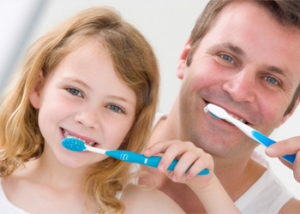
 When kids have two homes their regular routines can often go out the window; one parent may well be more likely to allow more TV time than the other, for example, or prefer eating out to cooking at home. However one routine that it’s important doesn’t get lost during the change-over process is teeth cleaning and good oral hygiene, particularly amongst younger children. The noticeable long term habits of having a good teeth cleaning routine mean it’s worth the effort of establishing good habits now, even if your children are reluctant. Here are some hints and tips for encouraging good oral hygiene, and helping your kids form healthy dental habits that will last a lifetime:
Provide Help and Support
Many parents believe that simply providing access to a toothbrush and toothpaste is enough to encourage good oral hygiene habits, but in reality you need to be much more involved than that. Dental experts recommend that you should physically brush and floss your child’s teeth for them until they are at least six years old (and have the coordination skills to competently and consistently tie their own shoe laces). You should clean their teeth for them for at least two minutes every morning before breakfast and every evening before bedtime, using a fluoride based toothpaste and an age appropriate tooth brush. Once you have cleaned their teeth for them, encourage your child to then brush their teeth independently for another minute: this will build their confidence and encourage them to develop the skills they will need when they are old enough to brush their teeth independently. Once your child is over the age of six you should still supervise their teeth cleaning, to ensure they are brushing regularly and with good technique
Have Everything You Need in Your Home
When kids are switching from one home to the other it’s easy for things to be left behind, however if they forget their toothbrush this could give them the excuse their looking for to have an extended break from teeth cleaning. Given the equipment needed for good dental practice is so inexpensive, why not have everything they need permanently in your home? Buy them a tooth brush, tooth paste, and dental floss that they have constant access to. Why not take them shopping and let them choose their own? Toothbrushes are now available in a wide range of colours, designs, and even featuring their favourite cartoon characters, which could help to make teeth cleaning time a little more fun.
Model Good Habits
Children learn their behaviours by watching their parents and modelling on them, so it’s important to practice what you preach. Clean your teeth thoroughly morning and night, and take care of your smile. Why not clean your teeth at the same time as your child’s, so that you can form the healthy habit together? Whilst regular dentist visits can be expensive, particularly if you don’t have dental coverage, it’s important that you visit the dentist regularly and that you take your child to the dentist regularly too. Dentist trips are no fun for anyone, and your child is likely to be reluctant and apprehensive, but it is the best way of ensuring your child better understands the importance of taking care of their teeth, and of dealing with any dental problems as soon as they arise.
Talk About What Will Happen If They Don’t Brush
It can be difficult to deal with a reluctant tooth brusher, and most parents don’t relish the thought of having to hold down their distressed child so they can brush their teeth, so finding other strategies to encourage good oral hygiene is preferable. Talk to your child about cavities and tooth decay, explaining how germs will affect their smile and that once teeth have been damaged by decay they cannot be repaired: if your child is a visual learner then showing them some images of damaged smiles and decayed teeth online might well help to drive your message home. Good oral hygiene is a lifelong habit that needs to be formed as soon as possible, so it’s important to use whatever tools you have in your armoury to get your child brushing every day.









 There are so many individual things that cause pain after separation. It sometimes feels like your stuck on a emotional roller coaster. I’ve talked before about ways to “SELF CARE” during these years, but when I think about what it is that causes the downs, there is a top 4 that seems to be ongoing and are a little more sticky and prickly than some of the others. I would be interested in knowing if your pain has been the same as mine?














Recent comments