The Dad documentary

FOUR DADS, ONE MUM, A JOURNO, A PROFESSOR OF FAMILY LAW, A JUDGE AND A POLITICIAN, ALL COME TOGETHER TO TELL THE STORY OF BEING A DAD.

In May 2013,  a Dad desperate to spend more time with his children asked me to research the injustices within the Australian Family Court and The Child Support Agency.

I couldn’t believe this worldwide problem was buried so deep, one which affects every person, young and old and is detrimental to our future, the cornerstone of society – family.

Parents all over the world are being alienated from their children, costing society millions and increasing the rates of depression and suicide.

Our Family Law system is “grossly overstretched”, court orders are not enforced and there are no repercussions for perjury.

Is our current judical system really working in the ‘best interest of the children’

https://www.youtube.com/watch?feature=player_embedded&v=0Yor8GUuBVo

Directed & produced by: Karen Hodgkins
Virtual Reality Media

Note: There will be campaigns run around Australia, I will keep you updated once we know their plans, dates and locations.

Card Hug – a great way to keep in touch

It is not surprising that Australia Post won the best print advertisement at the Caxton Awards in 2007.  M&C Saatchi Melbourne created the advertisement rightly named “Letter Hug”.  In a previous post we spoke briefly of keeping in touch in between visits by sending a card, for the purpose of this post we should call it the “Card Hug”.  The cards are simply written with loving words that ensure your children know they are top of mind even when you are not there.  It can be a message saying  you have arranged something special for the next time they visit, or you were remembering the last weekend and how much fun you had together.

It could be even letting them know how proud you are of them and to have a great week with their mum and you will see them soon. There are lots of message ideas and anyone from 4 – 74 enjoys receiving cards.  A “card hug” sent fortnightly can be a wonderful reminder and a nice habit to get into.

Let us know if you have had experience with this?

More contact = Less grief

Fathers who have more contact with their children suffer less grief than fathers who have little contact. I have experienced both sides of this fence, and can empathise with fathers who see their children only every second weekend or less for that matter.  This causes grief through the feeling of “separation loss” of your children.  The moment we leave the family home our role changes, we are forced to physically care less for our children on a day to day basis. Everything we used to do in our former family life is adjusted!



There were times I questioned if I did the right thing and may have thought I could have worked harder at trying the save the marriage? These feeling came about from going to sleep and waking every morning without my child, I found it extremely distressful even though I was happy to be out of the marriage!

There has been very little research on the well-being of fathers leaving the family home however, in 1987 some research showing that men after divorce and separation who had children were more likely to suffer levels of depression and had lower self image issues than men who were otherwise married.

In 2007 a thesis was conducted by Helen Margaret McKeering at the Queensland University of Technology,  on Separated Fathers: Generativity (generative work), Grief and Mental Health.  It looks to provide answers to questions about the relationship between generativity,  access to children,  grief and mental health amongst separated fathers.

In summary the thesis found when a father is prevented from  behaving as he believes a father should, a dissonance between his behavior and his cognition’s occurs, which may result in mental health problems and low levels of well being.  Fathers who consider themselves as “good fathers” may consider the father role to be that of the provider with a distant style of physiological involvement such as moral guardian.  Other “good fathers” may perceive the father role to be predominately child-parent interaction with emotional  involvement and hands on approach.  Many father will incorporate mixtures of both dimensions in their ideal father role.

Definitions are as follows:

GENERATIVITY– Is the process of learning to care for others and an interest in establishing and guiding the next generation.

GENERATIVITY WORK – The concept of fathering,  mens sustained efforts to care for and about their children.

GRIEF– Is the emotional, cognitive and somatic reaction through the perception of loss through separation or death.

The level of support is minimal offered to fathers in coping and dealing with these issues and I suggest that you actively seek out your own help as I did i.e. speak to people such as physiologists and  counselors. They won’t try to persuade you to stay together or even separate, they are great listeners  helping  you to deal with your loss and pain and very importantly provide you with coping strategies to help work through your individual needs.

Even if you are adjusting to your new life as a separated dad, the feeling of loneliness and loss is very real. You must always remember that your children will cease having a dad only when you give up being their dad!  The key word is “perseverance” would you mind if I said that again “perseverance”.  You can find an interesting article in Divorced Dads – Survival Guide for a good read on this topic.

Our emotional and mental state gets a beating and I don’t believe that we ever fully recover, recover yes but fully?  I would be interested in your comments.


Your Dream

Live-Your-Dream with no regretsEver thought of becoming a builder; personal trainer; becoming a better friend or father; running a marathon; or writing a book?

We all have dreams but too few of us have the faith or fortitude to see them through. Committing to realizing your dream can often be so daunting we relinquish the idea to fantasy – never living our dreams at all. They become the regrets and “what ifs?” of our lives.

Is it the thought “I might fail”, or worse “I might succeed”? Is it you feel you’ve left everything a little too late? Have you procrastinated around your dream? Have your friends, family and loved ones dismissed you and your ideas and dreams as mere fancy? Have you been bullied or manipulated into thinking other people’s opinions are correct? Or is it that you simply doubt your worth and ability? What does your heart tell you? Have you just quit?

The truth is its okay to be frightened. The truth is (from time to time) people will dismiss you and pull you down particularly if you want to stretch yourself spiritually, physically, and intellectually. The truth is its likely you do this to yourself as well. The truth is it’s your dream and no one else’s so it’s likely you will be in it alone.

More than anything ever created, any disease, any famine, or violence. More than any war or any abuse; fear has done more to damage people’s lives (and leaves in its wake mountains of despair and destruction) than any other spiritual or physical instrument imaginable.

Unfulfilled lives cause people to become lost, bitter, and barren.

So how do we win? How do we overcome negative outside forces and our own self-loathing? How do we live a life without regret?

At church, at school, through our parents (if you were blessed), in books, and at motivational meetings each of us has likely to have heard the message “we’re all capable of accomplishing incredible things”.

“Your life, your perfect life is waiting for you.” “The life you want to live, the life you dream of is available to each and every one of us right now!”

I expect the evidence around you tells a different story. Evidence of bad blood between brothers, closed hearts, unrequited love, hopeful careers fallen by the wayside, and lovers and children you don’t know how to communicate with anymore. Resentments unforgiven, a mortgage hanging around your neck, an addiction tearing at your soul, the darkest loneliness, or perhaps it’s as simple as a lie you told your boss that won’t let you sleep at night – the list is endless isn’t it?

So what is the truth? Is the good life merely an un-kept promise? A fable? Something that’s exclusively available to everyone else except you?

Fear some say, is “false evidence appearing real”. Yet if you’ve ever felt fear at any depth you’ll know it doesn’t feel false, it’s about as real as it gets.

The dictionary says fear is “a distressing emotion aroused by impending danger, evil, or pain whether the threat is real or imagined.”

Is there more to fear than our own imaginings? I expect so, because of course there is the seen and the unseen. It is my personal belief that fear, procrastination, and dark imaginings don’t just come from within, they also come from with-out. However, fear does come in many forms, and regardless of the type it insidiously sneaks in to ruin any chance of our achieving our true selves.

I can’t promise you that overcoming fear will suddenly catapult you into a new and grand life, accelerate your sales, or get you the relationship you’ve been dreaming of, but I can promise you peace-of-mind, and perhaps a wiser heart. And for some, this alone would be an amazing life to live, yes?

The biggest problem with self-imposed fear is that it isn’t probably real, but it is a natural reaction to things we perceive as painful or challenging. The trick in overcoming this type of fear is to learn how to remain in the moment. Don’t live in the past or the future, each only exists in our imaginings. If you live in the ‘now’ your fear will be diminished because most self-ignited fear is about something that happened to us years ago, or something we fantasize might happen in the future.

Expect the worst, and the worst is likely to come. Expect the best (not second best) and something better will indeed come. I’ve written much about ‘action and courage’ over the years, two tools that will help you overcome your fears. But its action that’s key.

Success at life is a result of getting in the game. You cannot win by standing on the sidelines watching everyone else play. The fear of rejection, confrontation, loss, and humiliation all keep us from living, and help us build a large pile of regrets. Of course participation in life is not a perfect recipe, there is always the risk things will not go as planned. But that’s the game right?

A dear friend of mine wrote:

Some people spend all of their lives saying “If only”, “I could have”, and “I should have”; but then there is you and me. The ones who dare to jump into the fire, the ones who stand up for one more round with the taste of blood in our mouths.

The ones, who don’t quit, who don’t betray (ourselves or others); and in this resilience find the only reward there is. A life well lived.

Thank you to Michael Tate for this inspiring story.To learn more about Michael, click on his name and it will take you to his LinkedIn profile page.

The top 5 reasons why Men and Woman cheat

CheatingYou see them and their smile melts you… and they’re into you, too. A few months pass and you’re in a committed relationship with “I love you’s” and great times. Then… the unthinkable: They cheat. The emotional reaction is one we know well: “How could you DO THAT!??!” However, the act — while the ultimate expression of physical betrayal— is a symptom of the real issues. What really needs to be looked at and discussed is: What were the precursors to their infidelity? What were the challenges in the relationship? What was said and unsaid, and what were the warning signs?

Does that mean there’s an excuse? Hardly. Despite recent articles and studies that suggest the existence of a cheating gene ingrained into the DNA of some people (nothing like being the victim of your own choices), there is no excuse for infidelity. There can be explanations , but there is no excuse. Ultimately, if you are unhappy in your relationship that you are looking externally to fulfill your emotional/physical needs, you need to leave… close one chapter before starting another, and allow every their dignity and honor as things end. Unfortunately, that’s not necessarily the way things go sometimes.

FLINGS AND AFFAIRS
There are two types of extramarital relationships: Flings and Affairs. Flings are the most common, most often involving opportunity, lust, and lack of self-control. Whether you are talking about a man or a woman, you can hear the excuses/justifications in your head: “Babe, I screwed up. I got drunk in Vegas with the [guys/girls] and ended up sleeping with this stripper I met at the club. It didn’t mean anything, and I promise it won’t happen again. Please forgive me.”

Okay… people aren’t perfect. They make mistakes. They make bad choices. And sometimes, opportunity can make good people do bad things. But Flings are really about no self-control, and they showcase how the cheater is willing to sacrifice their honor—and their partner’s honor—for a one-night-stand. Choosing to forgive a Fling means you need to think long and hard about it. I’m not a believer in”Once a cheater, always a cheater,” (because cheaters can choose to follow a faithful path with different partner with different relationship dynamics), but Flings are about selfishness… and that doesn’t just go away.

Affairs are different, as they aren’t fast hit-it-and-quit-it acts of misguided lust and sexual wanting. These are long-term relationships—sometimes involving sex, sometimes not—and they are trickier for someone to get over because their has been investment over time—and it’s also an emotional investment, as well. People sharing the inner-workings of their personal lives, their activities, their kids—all while dropping back from their established relationship. All-in-all, forgiveness and moving past an Affair is wrought with challenges.

Which brings us to a different kind of cheating for the web-based era: Online Affairs. There are an endless number of websites that advocate and enable real-world affairs (whose highest spending advertisers are divorce lawyers). But meeting someone online and then quickly transferring the relationship to the real world is really just a fling. Online Affairs are different. With the use of social media and community-centric websites now ingrained into our everyday lives, connecting with others in remote locations isn’t just the activity of a small subculture. Bottom line: Online cheating—without any physical contact—is the most damaging type of infidelity. The reason? The entire “connection” between the two parties is emotional.

BUT WHY DO THEY CHEAT?

In surveying 1,000 men and women (483 men, 543 women), two things became clear: 1) Women cheat just as much as men (dispelling the myth that men cheat more); and 2) The reasons the genders cheat are very different. 86% of the women polled reported that they cheat mostly for emotional reasons, stating the following top reasons for pursuing an extramarital affair:

  • Lack of emotional intimacy
  • Marital or relationship unhappiness
  • Reaffirm her desirability
  • To re-experience feelings of romance
  • Loneliness

Of the men polled, 82% openly admitted to cheating largely for physical or sexual gratification with no emotional tie. Rounding out the top reasons men cheat included:

  • Just want to have sex or sexual variety
  • Presented with an opportunity to have sex, without getting immediately caught
  • Satisfy sexual curiosity about having sex with a particular person
  • The “thrill of the chase”
  • The desire to feel important or special (an ego boost)

However, in delving further into the mens’ reasons, I discovered that many of the men felt that they were “unable to get out of their relationship” prior to their infidelity, which translated into the simple fact that they lacked the skills/respect to maturely discuss their unhappiness with their significant other. In short, they acknowledged that they were unhappy and looking for a way out, but they couldn’t bring themselves to pull the trigger on the relationship. If they cheated and got caught (most long-term cheaters do end up getting caught), they were able to quickly turn the tables, telling their spouse how it was THEIR fault they cheated because [insert reason here: not enough sex, boredom, etc.].

This lends credibility to thousands of discussions interactions I’ve led on my Facebook page— cheating is a symptom of an already failing/failed relationship. Communication has broken down and a disconnect already exists. The cheater is looking outside of the relationship to have their emotional/physical needs met because they are [usually] already mentally checked-out.

FINAL THOUGHTS
Monogamy and exclusive relationships aren’t for everyone. But, if you’ve made promises, stick to them, or have the common courtesy to close one chapter before starting another. That way, everyone can keep their honor and integrity… and move on.

“Original article on charlesjorlando.com. Reposted with permission.” http://www.theproblemismen.com/rants/whytheycheated

Where possible always choose to mediate

Emmanuel Samios BarristerIf you were in a relationship that has irretrievably broken down, you may have some questions…
How do you settle your affairs and move on with your life?
How do you make parenting arrangements with the best interests of your children in mind?
How do you divide the matrimonial property in a way that is just and equitable, that you can both live with?

The litigation trap
If you can’t negotiate these issues with your former partner, it’s tempting to file a family law application in Court.
If you make the decision to litigate, you will likely begin a process that is extremely costly, stressful, inconvenient and time consuming for both of you.

Flaming conflict
You should also remember that litigation usually adds to the conflict.
Where children are involved, you should consider it your personal duty to reduce conflict if at all possible… to minimise the risk of your adult issues affecting your children.
Another problem is that if you initiate litigation, it can make negotiation with your former partner much harder.
There is a real risk that they will stop thinking about how to solve the issues with you, and focus their attention to beating you in court.
That is a completely different mindset that can escalate the conflict.
Suddenly, they may stop talking to you and demand you only speak to them through their lawyers.

Best time to mediate
I think the best time to mediate is usually before you commence litigation… and for maximum chance of success, I encourage you to attend my mediations without legal representation.
If your matter is already in court, we can still mediate to try to get you out of the court process before you incur even more legal fees.

Keeping control
By filing in court, what you are really doing is taking the decision making power out of your hands and placing it in the hands of a Judge.
You may be lucky and everything goes your way in Court.
However, what often occurs is that the Court will make orders that both parties are unhappy with.
It’s my opinion that the Australian Family Law Judges do an excellent job managing a very heavy work load.
The Australian judiciary is truly outstanding.
But… that said… who is in a better position to understand the needs of your children?
Is it you and your former partner, the people who raised your children from birth… or is it a judicial officer who is working from a court file?
With proper guidance, you and your former partner can make the best decisions for your children.

Privacy
There is also the matter of your privacy… the court is a public place.
Do you really want to air your dirty laundry for the world to see?
Do you want your family, friends, community to know what happened inside your home… inside your bedroom?
Do you want everyone to know your most sensitive financial affairs?
If you keep control, you can also protect your privacy.

Costs
There is also the issue of cost.
In Australia, it is common for legal fees to exceed $20,000 or $30,000 to take a simple matter all the way to a final hearing in court.
Your former partner will likely spend a similar amount of money.
I’ve seen cases where a party has spent over $100,000 on their own legal fees.
Where is the sense in you and your former partner spending so much money on legal fees?
… with no guarantee that you’ll get an outcome you can live with?

Lawyers
I have had the privilege of being briefed by some of the best Family Law solicitors in Australia.
You should find that most Australian solicitors are highly ethical and will do their very best for you…
But to provide you with high quality representation, they rightly need to charge proper fees for their professional time… and these fees will quickly add up.
No matter how hard they try to minimise your legal fees, they may have a hard time doing so where there is excessive conflict.
Let’s see if we can work together to reduce the conflict and minimise your legal fees.

My advice to you is to start the resolution process with mediation.
Don’t tangle yourself in litigation.
Don’t escalate the conflict with your former partner.
Keep control of the solution and don’t delegate your decision making power to the court lightly.
Defend your privacy.
Don’t spend huge amounts of money on legal fees … that is money which should go to you and your children.

Conclusion
As a family law barrister, I can assist you and your former partner to come to an agreement that you can both live with.
You will benefit from my experience in the Australian Family Law courts and benefit from the dispute resolution techniques I have developed in my practice.
My chambers are in Melbourne, however I will also mediate in Brisbane and Sydney.
Please contact my clerk, Patterson’s List, on 03 9225 7888.
Just tell my clerk that you would like to arrange a mediation with Emmanuel and we can make the arrangements.

Written by:
Emmanuel Samios LLB(Hons) LLM(QUT)
Barrister-at-Law
https://www.youtube.com/watch?v=scciQLqghnk

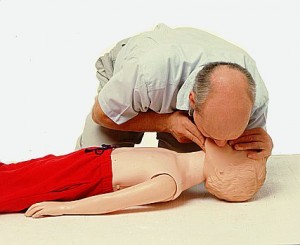
Do you know how to perform CPR?

Do you know how to do CPRKnowing the basics of performing CPR can be the difference between life or death. It could be a friend or heaven forbid your child! Being able to jump in and help can keep blood flowing through their body and keep vital organs alive whilst the ambulance is on the way. I remember watching a women pull her child from the river in Merimbula NSW and she just didn’t know what to do and stood there crying? I was young and thought just DO something DO something! Luckily a person nearby jumped in and started mouth to mouth and CPR while we waited for the ambulance.


CPR (or cardiopulmonary resuscitation) is a combination of chest compressions and rescue breathing (mouth-to-mouth resuscitation). If someone isn’t circulating blood or breathing adequately, CPR can restore circulation of oxygen-rich blood to the brain. Without oxygen, permanent brain damage or death can occur in less than 8 minutes.

CPR might be necessary in many different emergencies, including accidents, near-drowning, suffocation, poisoning, smoke inhalation, electrocution injuries, and suspected sudden infant death syndrome (SIDS).

Reading about CPR and learning when it’s needed will give you a basic understanding of the concept and procedure, but it’s strongly recommended that you learn the details of how to perform CPR by taking a course. If CPR is needed, using the correct technique will give someone the best chance of survival.

CPR is most successful when started as quickly as possible, but you must first determine if it’s necessary. It should only be performed when a person isn’t breathing or circulating blood adequately.

First, determine that it’s safe to approach the person in trouble. For instance, if someone was injured in an accident on a busy highway, you’d have to be extremely careful about ongoing traffic as you try to help. Or if someone touched an exposed wire and was electrocuted, you’d have to be certain that he or she is no longer in contact with electricity before offering assistance to prevent becoming electrocuted yourself. (For instance, turn off the source of electricity, such as a light switch or a circuit breaker.)

Once you know that you can safely approach someone who needs help, quickly evaluate whether the person is responsive. Look for things such as eye opening, sounds from the mouth, chest movement, or other signs of life such as movement of the arms and legs.

In infants and younger kids, rubbing the chest (over the breastbone) can help determine if there is any level of responsiveness. In older kids and adults, this also can be done by gently tapping the shoulders and asking if they’re all right.

Whenever CPR is needed, remember to call for 000. Current CPR courses teach you that if you are alone with an unresponsive infant or child, you should perform CPR for about 2 minutes before calling for help.

Three Parts of CPR

The three basic parts of CPR are easily remembered as “CAB”: C for compressions, A for airway, and B for breathing.

  1. C is for compressions. Chest compressions can sometimes restore the flow of blood to the heart, brain, and other organs. CPR begins with 30 chest compressions, followed by two rescue breaths. This cycle is immediately repeated and continued until the child recovers or help arrives. It is not necessary to check for signs of circulation to perform this technique. Rescuers doing compressions should “push hard, fast, and in the center of the chest.” A CPR course will teach you how to perform chest compressions in infants, kids, and adults, and how to coordinate the compressions with rescue breathing.
  2. A is for airway. After 30 compressions have been completed, the victim’s airway must be open for breathing to be restored. The airway may be blocked by the tongue when someone loses consciousness or may be obstructed by food or another foreign object .In a CPR course, participants learn how to open the airway and position the person so the airway is ready for rescue breathing. The course will include what to do to clear the airway if you believe an infant or child has choked and the airway is blocked.
  3. B is for breathing. Rescue breathing is begun after 30 compressions have been completed and the airway is open. Someone performing rescue breathing essentially breathes for the victim by forcing air into the lungs. This procedure includes breathing into the victim’s mouth at correct intervals and checking for signs of life. A CPR course will review correct techniques and procedures for rescuers to position themselves to give mouth-to-mouth resuscitation to infants, kids, and adults.

Australian Red Cross and St Johns Ambulance all conduct courses around Australia and teach the latest techniques. They normally include general first aid training such as what to do when someone is choking?, burnt, stopped breathing, has a broken limb or faints.


If you going through a tough patch, make some time for your Body, Skin, Hair and Mind

make time for you body hair skin mindSpending time on your personal grooming can help you feel better – physically and emotionally. And feeling better can give you strength. Lets face it, there are many things that can put pebbles on your path – and we all know the occasional boulder 🙂

Don’t let them get you down or let them prevent you from getting out and enjoying life.

You might be invited to a family event, a friends BBQ, a date? or to the footy. Whatever you have on, don’t stay at home because you don’t feel good or quiet yourself. In fact, health experts agree that making an intentional effort to look after yourself will bring about both health and happiness if you just stick at it. Some tips to get you started and back on the happy are:

Body
Yes, that’s exercise. Working out can decrease stress, increase energy and definitely loose some weight. It’s always a great idea to check into your doctor for a chat about what your going to do and get all the regular tests done. That in itself can give you peace of mind.

Skin
Us blokes get into lifetime habits, if you have always washed with the same soap, maybe its time to change to something more sensitive to skin. If you were to ask around there are so many of us already onto it. We are using a gentle face wash, we don’t scrub like we are trying to take oil of the driveway. Treat your skin with respect. Remember skin loves moisturiser and hydration.

Hair
I started losing my hair in my twenties, I went from combing it every day and using “Uppercut” products made by Uppercut Deluxe Australia, I thought I was the coolest guy in my suburb to having it clipper-ed short every other week, i was still happy. I started with a number 3 a year later went No.2, then 1 and now its a full shave every 2 days. Lets face it, hair on your head (or without) or on your face represents who you are, its your trademark…it’s your brand! It gives you a look that people can make assumptions on. Are you Conservative, Formal, Rock star, Hipster or just however it falls? Take the hair quiz and find out a little more about what your hair really represents, click here: which facial hair style best sums your up?. Check out Uppercut deluxe video:

I recommend use a barber and get some of this product, it will make you feel good 🙂

Mind
You must find a way to relax your mind. Look for peaceful things to do, quiet times and times where you can be just on your own. Try massage therapy or even a simple head and shoulder massage at one of the many that are now located in our local markets around town. Unwind with some music or guided meditation. Other techniques such as yoga, deep breathing and meditation may also be useful: discuss the options with your doctor when you book that appointment.

Watching The Footy: What to do when the boys come around

boys watching the footyThe boys are coming over. What results is a football frenzy that may, or may not involve drinking, eating and possibly a little bit of raucous behaviour. When your team loses it could spoil the day but if you follow these tips, regardless of the results, you’ll always be a winner.


Food

You want something that’s easy to prepare so you’re not distracted from the business of watching the game. Rev up the BBQ and you can knock out some delicious and easily prepared food that will satisfy everyone. If you’re going for steaks and chops, make sure they’re in the marinade on the morning of the game. Overnight is even better. Throw them on the BBQ and away you go.

Snacks

Chips (hot and cold), dips, something healthy and something not so healthy. Know your friends and their dietary choices – you don’t want to exclude Keith the Vegan by laying on a meat-feast and forgetting to include some vegetables. Cover all your bases by supplying a wide range of snacks but remember that it might be a good idea to stagger the snack distribution; you don’t want everyone filling up before those chops and steaks come off the barbeque.

Drinks

Yes, beer and footy-watching go together like steak and chips but it may be the case that not all of your friends want to throw down booze and shout at the television. Maybe they’d like to shout at the television while drinking an orange juice or a non-alcoholic cocktail? Never pressure anyone to drink and always respect their choices. But for those who do want a beer, wine or rum and coke, be sure to keep the esky filled with ice and selections. Maybe suggest a pre-match kitty so everyone contributes?

Location of the TV

outdoor lunch watching the footyIt’s no good having the barbeque outside and the television inside. How will you catch all the action if there’s a wall between you and the game? Hearing your mates screaming in excitement is no match for actually seeing what’s going on, so either move the TV to a spot that’s visible from the barbeque or move the barbeque to a spot where you can see the TV – even if it means bringing the barbeque inside the house. That’s a joke. Don’t do it.

Sore losers and bad winners

Everyone knows the terrible pain of watching a favourite team lose and most people know the exhilarating joy of watching their team come out victorious. No one likes a sore loser and no one likes a graceless winner. Rubbing your team’s victory in the face of a loser is not good form and will often result in the breaking down of a friendship. As winner, offer condolences such as Well played, old chap. Better luck next time. And extend your hand in a gesture of solidarity and love of the game. Or just yell Sucker and run away.

What pre-footy rituals do you have? How do you like to watch the action? Share your answers in the comment box below.

OUT ON A LIMB

dads out-on-a-limbA book written by Simon Turner, containing helpful and practical suggestions to navigate the journey of separation and divorce. It is not legal advice nor gospel, rather it is real insight and learning’s from his recent experiences and observations whilst working through family law in Australia.

We enter this journey blindly and are completely unaware of what lies ahead. Most of us are not solicitors and are completely ignorant to what is the correct way to go about it versus the wrong way,  if you go forward without any advice or knowledge you will only learn lessons and those lessons come at a very dear price.

The book begins with some very clear and straightforward advice from a judge, which radically changed Simon’s understanding and ultimately his situation, the judge said…

You both think your right
Show me you have time
Show me you have a place

Separation &/ or Divorce whether you asked for it or not will frustrate you, sadden you, financially hurt you, emotionally drain you, distract you, challenge your logic and thoughts of what fair. Simon say’s “When everything appears to be spinning out of control, try standing still like a rock and see where things fall.”

There are ways and things that you can do to prepare yourself for a better outcome and keep your sanity along the way. This books provides an opportunity for you to be prepared, you are starting a journey that nothing you have ever done will prepare you for.

Simon has covered in good detail many topics and in his own words called some of them…

  • The 3 golden rules
  • Delaying the inevitable
  • Personal enemy number 1
  • Your guardian angle
  • The simple truth
  • Grizzly bear the cost of it all
  • You say, she say, hearsay
  • Sharing is caring
  • Deal or no deal
  • The big day
  • Abiding by the decision
  • No regrets
  • and many more….

During this time in your life, emotions will run high, you can be led down a road that you don’t know yourself any more and the decisions you make can alter your future for good or bad. We can be our own enemy and create damage for our self, our relationships and our children if our emotions are not in check. All our actions and behaviors are within our control,  how we behave during this time is what we will be judged on. Take the time to grab a copy of Simon’s book and knowledge up. I assure you it will help.

You can buy a copy of this book by clicking here.

Best wishes for all the guys going through this.

How well do our children know us?

your story your wordsEveryone of us has a story to tell. Our life is unique to us and our journey, experiences, feelings and memories to date have carved us into who we are today. These experiences can be shared with our children in a creative way. Below are many questions that often don’t get asked, you can go a lifetime and your children will not know the answers to any of these insights into your lifetime.

It can bring you closer &/or open up topics for further discussions. Answer the questions as if your child is asking them. Why don’t you copy and print them out – take your time to answer them carefully and honestly, include as many photos as possible then present it to your child/children as a gift.  You could even get it published online as a book for little cost, simply Google “online publishing” and there are many to research and choose from 🙂

 Questions to share:

  1. Tell me about the time and place you were born
  2. What are your earliest memories?
  3. Tell me about your Mum and Dad
  4. What do you think your parents thought of you as a child?
  5. What interesting information do you know about other people in your family?
  6. Detail what you know of our family tree?
  7. Tell me some more about your family that may interest generations to come.
  8. What do you remember about the places you lived when you were a child?
  9. What were your favorite childhood toys or games?
  10. Tell me about your best friends as a child.
  11. What do you remember about holidays as a child?
  12. What sort of pets did you have when you were a child and what was their names?
  13. What were you best at when you were at school?
  14. What did you want to do when you grew up?
  15. Who was your best friend as a teenager and why?
  16. What were your favorite hobbies when you were young?
  17. Did you have a idol when you were young? tell me who and why.
  18. What was the first piece of music you bought?
  19. What would have been your top 10 favorite pieces of music when you were young?
  20. Describe any family traditions you had when you were young? or maybe still have.
  21. What age did you start work and tell me about the jobs you have had?
  22. What was the first car you ever owned and tell me about the other vehicles you have had?
  23. How did you meet my mother?
  24. What were some of the things you would do on a night out with each other?
  25. Describe a special day you had with my mother?
  26. How did you feel when you found out you were going to be a father?
  27. What did you think when you first saw me after I was born?
  28. What were my statistics when I was born – time of birth, height and weight?
  29. What did I look like when I was born?
  30. Did you have a nickname when you were young? what was it and why?
  31. Before I was born what other names were you thinking of calling me?
  32. What was the first word or words you remember me saying?
  33. Describe some of the favorite memories you have of me when I was a child?
  34. What was I like when I was a child?
  35. What attributes did I have as a child and still have now?
  36. What were you most proud of me when I was at school?
  37. Describe what you like about me?
  38. Is there anything you would like to change about me?
  39. What are the happiest memories of your life so far?
  40. What are a few of your favorite things?
  41. Tell me about the tings that make you laugh?
  42. Describe your memory of a major world event that has happened in your life.
  43. Describe the greatest change that you have seen in your lifetime so far.
  44. Describe something you still want to achieve in your life.
  45. Tell me about the dream you have for your life.
  46. If you were an animal what type of animal would you be and why?
  47. If you won the lottery what would you do with the money?
  48. What have you found most difficult in your life?
  49. What is your biggest regret in your life and can you do anything about it now?
  50. With hindsight what would you do differently?
  51. Tell me something you think I wont know about you.
  52. What would you like your epitaph to say?
  53. Is there anything you would like to say sorry for?
  54. What piece of advise would you like to offer me?
  55. Is there anything else you would like to say that hasn’t been mentioned?
  56. And now for the record…
    • Your full name?
    • DOB
    • What colour are your eyes?
    • How tall are you?
    • How much do you weigh?
    • What blood group are you?
    • What was the date you completed this journal for me?

Create a treasured family keepsake, share you life, your journey, your memories, your laughs and even your challenges.

Finding a way back from infidelity

infidelityDid you have an affair and are wondering how you can find your way back and recover from what could be lost forever. What are some of the steps to try and save your relationship as your partner now feels betrayed, cheated and has lost all trust and respect in you? What can you do to help your partner recover after you have chosen a road for them that they never asked for?
Ideas to assist in your journey
  • Own the problems that you created by having an affair. be truthful. you cannot change what you don’t acknowledge.
  • It is unfair to compare a new, exciting, taboo fantasy relationship to one you’ve been in for years where there are kids, bills to pay, a house to run and noses to wipe. That is a ridiculous comparison.
  • In order to resolve your relationship, contact with “the other person” must be cut off 100 percent. You can’t work on dealing with the consequences of the affair while you’re still having it.
  • Don’t rely on your heart to tell you what to do; rely on your intellect. Do what logic tells you is the right thing to do.
  • Make the hard decisions. Either leave the marriage to free your partner, or commit to stay. Remember, checking out of one relationship before you finish it appropriately doesn’t work.
  • Ask yourself: What are you doing to help your partner get past the affair?
  • Be mature enough to recognize that life is not always all about you and what feels good for you in the moment. If you are married and have children, you have an obligation and a commitment that far transcends what feels good.
  • Help the partner who did not have the affair find emotional closure. You must do whatever it takes until your partner finds it. If it requires you to check in with your spouse multiple times a day, then do it. It’ll require you being where you’re supposed to be, when you’re supposed to be, 24 hours-a-day, seven days-a-week, so your spouse can trust you again. And you do it until.
  • If a child was born of the infidelity, you will have to have contact with the other person in order to be co-parents. And you do this the right way by not having any contact without your spouse’s involvement. If you want to talk with the other person, then you do it with your spouse present.
  • Want to know if something is cheating? If you wouldn’t do it with your spouse standing there, it’s cheating.
  • If your marriage is over and you have children, understand that your relationship with your ex will never end. You will always at least be co-parents of your children. Build a new relationship as their allies.
  • Do you know what a healthy relationship is? Figure out what you want and behave your way to success.

We acknowledge Dr Phil for these tips.