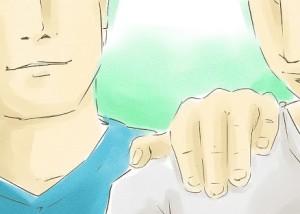
What every parent with a child who self injures needs to read

First a little about the author:

Garry King has extensive experience with working with young people encountering the issues of self harm and suicidal behaviour. This experience is the result of having worked as a teacher, youth worker and counsellor and complimented by degrees in welfare and education as well as masters degrees in counselling and suicidology. Garry has previously worked as the youth welfare consultant for the Australian Institute for Suicide Research and Prevention. He was appointed an adjunct lecturer, youth welfare at the Central Qld University and is the recipient of a Churchill Fellowship to the USA.

Garry has written a number of journal articles and books on youth welfare as well as being a speaker at national conferences. He is a peer reviewer for the International Journal of Crisis Intervention and Suicide Prevention. Garry is an invited author for the 2015 School Social Work USA. Garry presented at the 2016 International Society for the Study of Self Injury Conference in the USA.

If you have opened this page you are either curious, interested, have a child you are worried about that might be self injuring or your know someone who has a child that could be self injuring and you want helpful information? This type of behaviour is terrifying for families and Garry’s book will assist you with practical advice, hope, and the best research available on how to stop this behaviour.

First lets define NSSI “Non Suicidal Self Injury” – The International Society for the Study of Self Injury say’s: the deliberate, self-inflicted destruction of body tissue without suicidal intent an for purposes not socially sanctioned. It’s where a person purposely cuts, burns or inflicts damage to the body to achieve an outcome that is not socially acceptable.

Most research indicates a figure of 10% to 20% of young people having self injured at some stage. When broken down over a lifetime it equates to 11.1% females and 5.1% males have self injured at some stage.

There is an argument that the male statistics maybe under reported due to the fact ,males are more reluctant to seek help.

There are many and varied reasons why a young person may self injure. The most common reason is that they may become overwhelmed with painful emotions and are not able to manage this (self regulate). Findings do support that it is a coping strategy  because self injury allows them, for a short time, to feel in control again.

There are young people that are more at risk than others which can be understood by reading Garry’s book.

Because NSSI is often secretive and every parent hopes that their child doesn’t become involved it means, that at times, it can go undetected.

Things to look out for that could be a sign that your child is self injuring are:

  • Frequent injuries with suspicious explanations
  • unexplained bandages
  • Inappropriate clothing – jumpers in summer i.e hoodies
  • Excessive bangles, wristbands
  • low emotion regulation (they get upset very quickly and have trouble calming down)
  • Extreme sensitivity to rejection (overreacting to negative situations)
  • Self defeating (gives up easy, wont try new tasks)
  • Relationship problems
  • Avoiding Sports (where they may have to change clothing in front of others)
  • Discovery of implements, broken razors, blades of pencil sharpeners
  • Blood on clothing, towels or tissues
  • Itchy under clothing (wounds healing)
  • Withdrawing from activities they previously enjoyed and isolating themselves

Finding out that your child is self injuring is a confusing time, you will be thinking “why, what can I do, why don’t they talk to me, who can help”? All very valid thoughts. If it is happening…

  • Stay & appear calm, even if you’re not. Get medical help if needed.
  • Get mental health support, if you are unsure how, speak to you doctor about this and they will guide you.
  • Have first aid supplies on hand
  • Encourage the young person to seek help when the urge increases
  • Utilize the strategies that their counselor or therapist has taught
  • Teach social skills, problem solving, discussion making, conflict resolution, team work, communication skills etc.
  • Harm minimization, remove objects where possible. Speak to your counsellor or therapist about how to go about this
  • Be there for your child

If your child starts to self injure, its very important that you seek out professional help and link up the services that can assist.

There is help available for your child, Garry’s book is only $15 (inc postage) and it is written in everyday language and offers well researched advice. click here to order your copy

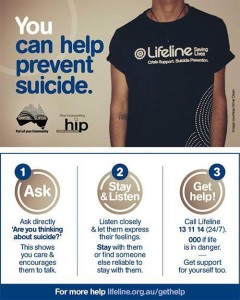
If you feel overwhelmed and need to talk please call:

All alone! Whether you like it or not, alone is something you’ll be quite a lot!

Life quotes from Dr. Seuss
“Today you are You, that is truer than true. There is no one alive who is Youer than You.”

Sometimes the most simplest truest and most important messages can be found and read at just the right moment when we need them…Is this that moment for you? You found Dads Online for a reason…

  • Why fit in when you were born to stand out
  • You have brains in your head. You have feet in your shoes. You can steer yourself in any direction you choose.
  • Be who you are and say what you feel, because those who mind don’t matter and those who matter don’t mind.
  • You’ll miss the best things if you keep your eyes shut.
  • A person’s a person, no matter how small.”
  • Unless someone like you cares a whole awful lot, nothing is going to get better. It’s not.
  • Sometimes you will never know the value of a moment until it becomes a memory.
  • Don’t cry because it’s over, smile because it happened.
  • Only you can control your future.
  • Today I shall behave, as if this is the day I will be remembered.

Life’s too short to wake up with regrets. So love the people who treat you right, forgive the ones who don’t and believe that everything happens for a reason. If you get a chance, take it. If it changes your life, let it. Nobody said it’d be easy, they just promised it would be worth it.

Dads Equality

I’d like to talk about Dad’s Equality, equality seems to be the topic of the year so why not include dads?

I have been thinking about all the things that greats mums do and all the things great dads do and I am racking my brain to find anything that good mums do better?

Of course there is – Child birth and breast feeding, you can have that! But part from those two things I cant think of anything else?
Dad’s are a 50/50 equal part of their child’s life so lets go through the list of tasks that Dads can do equally as well as mums…

Dads can absolutely

  • Wake the kids up and get them out of bed for breakfast
  • Prepare & Cook dinner
  • Wipe down the kitchen benches
  • Make beds
  • Clean the kitchen
  • Put a load of washing on
  • Make breakfast for everyone
  • Pack dishwasher or wash up
  • Get child/children to brush teeth
  • Hang out a load of washing
  • Help the children to get ready for bed
  • Read bedtime stories
  • Make the lunch boxes
  • Help child/children with hair
  • Vacuum & sweep the floors
  • Pay the household bills on time
  • Help child/children get dressed
  • Check for any school paperwork
  • Attend parent teacher interviews
  • Remind family of the day’s appointments
  • Get the children to have a bath
  • Take child/children to school in the morning
  • Put shoes and clothes away
  • Take the kids to the doctors or dentist
  • Read with our children
  • Put out school uniform and shoes
  • Tidy up the toys from that day
  • Wash dishes and put them away
  • Address any homework that needs doing that evening
  • Pick child/children up from school at the end of their day
  • Feed the pets
  • Pack child/children’s school bags
  • Pack bag for work
  • Write in the children’s homework books
  • Put on the slow cooker/defrost something for tea
  • Remind the children about good behaviour for the day
  • Prepare an after school snack
  • Ferry child/children to appropriate clubs
  • Unpack the dishwasher
  • Split up any arguments
  • Rinse out water bottles
  • Test children on homework
  • Know who their friends are?
  • Talk about what was great about their day
  • Talk about what was challenging
  • We spend time in knowing our child
  • We can love and nurture, care and provide equally as well as any good mother.

What are some of the things you do as a great dad?

Something to think about and hold your head up high, …have a great day!


Equality Vs Power and Control

There has been so much effort over the last few years in trying to curb men’s behavior when it comes to violence in the home. There will be much more work done in this area and anyone that thinks that using violence is ok should think again.

I have always wondered want benefits are there for using violence? The costs outway the benefits one thousand fold such as, loosing relationships, loosing children, shame, guilt, financial costs, self asteem, trust, employment, self respect and more…

The government is putting millions of dollars in communication and training more facilitators to help retrain these men on how to behave respectfully and in a non violent way to keep their family safe. This course is called the “Mens Behavioural Change Program”  or MBCP.

Men will buy a ticket on this train (course) if they are brought to the attention of the Police or Courts, it will be made mandatory for many. I have even heard that the men’s wife have said unless they correct their behavior they will leave them and the relationship will end. These men sign up for the course voluntary to help save their relationship.

Family Violence can take on the form of many behaviours, if you were unsure about your own behaviours in the home, let’s look at FAMILY VIOLENCE ACT 2008 – SECT 5

Meaning of Family Violence:

Behaviour by a person towards a family member of that person if that behaviour

  • is physically or sexually abusive
  • is emotionally or psychologically abusive
  • is economically abusive
  • is threatening
  • is coercive
  • in any other way controls or dominates the family member and causes that family member to feel fear for the safety or well-being of that member or another person
  • unlawfully depriving a family member of the family members liberty or threatening to do so
  • causing or threatening to cause the death of, or injury to, an animal, whether or not the animal belongs to the family member to whom the behaviour is directed to as to control, dominate or coerce the family member

Behaviour by a person that causes a child to hear or witness, or otherwise be exposed to the effects of, behaviour refereed to in the above points.

Examples:

  • overhearing threats of physical abuse by one family member towards another family member
  • seeing or hearing an assault of a family member who has been physically abused by another family member
  • comforting or providing assistance to another family member who has been physically abused by another family member
  • cleaning up a site after a family member has intentionally another family members property
  • being present when police officers attend an incident involving physical abuse of a family member by another family member

To remove doubt – It is declared that behaviour may constitute family violence even if the behaviour would not constitute a criminal offence.

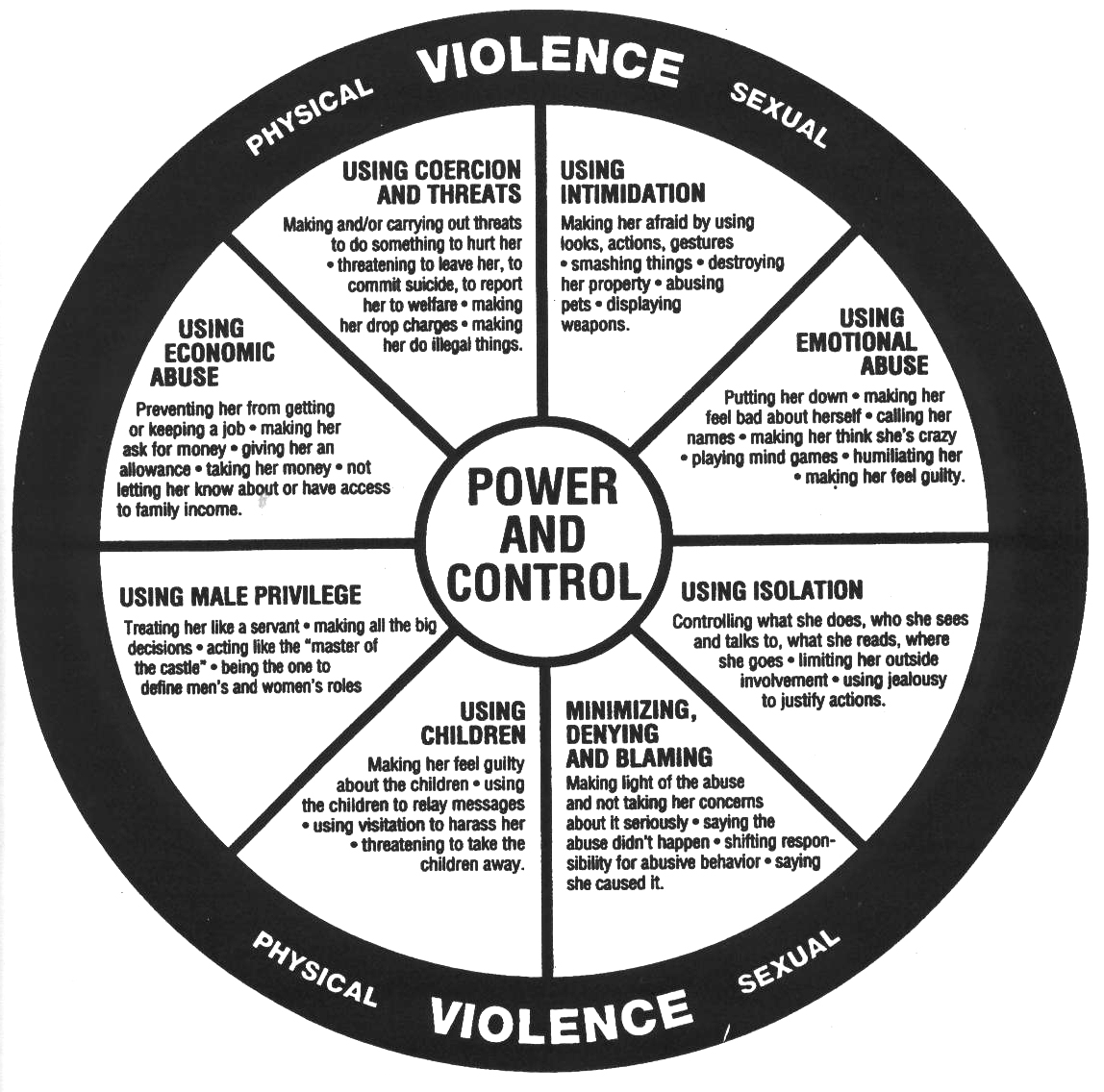
There is a huge difference between Anger and Violence. Anger is an emotion and Violence is a behaviour that is completely unacceptable and there is never an “ok” time to use it in the home on family members.

Violence comes from POWER and CONTROL, see below the 8 categories that constitute family violence

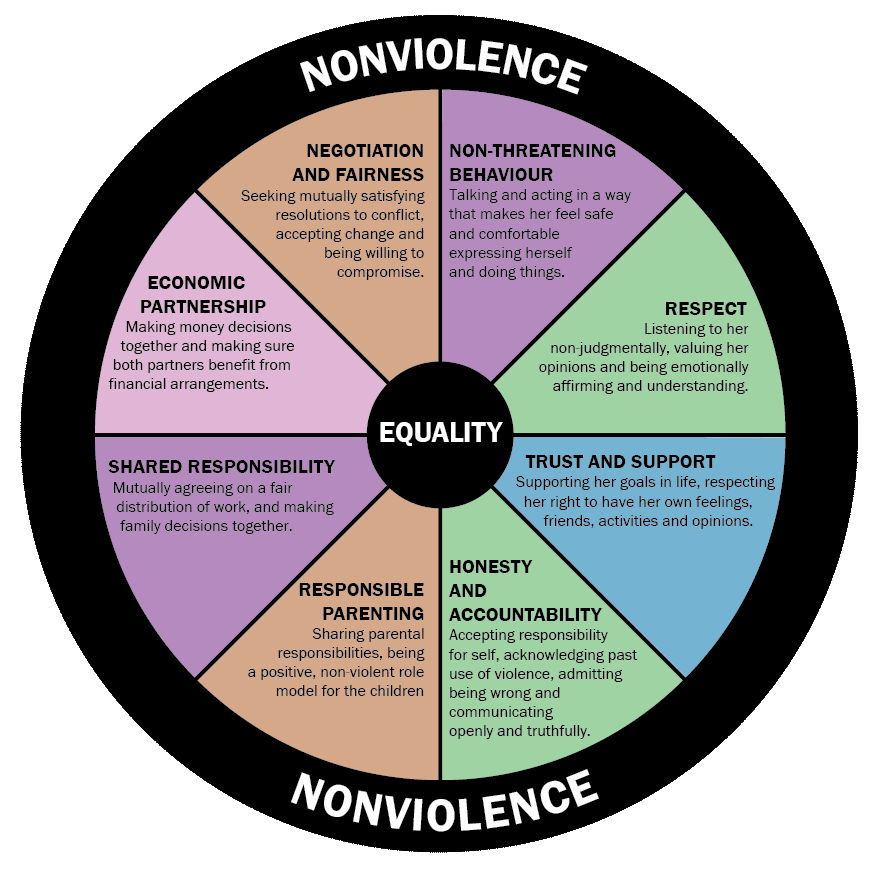
The Men’s Behavioural Change Programs is for men who want to stop using violence in the home and concentrates on teaching skills and providing tools to treat their family members with EQUALITY. See below the EQUALITY wheel that every family member deserves to feel.

Ifyou know you are using any type of violence, intimidation or coercion in the home, please get help.

Google MBCP nearest you. Some of the organisations that provide MBCP are:

Relationships Australia
Heavy M.E.T.A.L Program
FamilyCare
Lifeworks
Anglicare

Also call the following help lines that can talk about it with you and assist you in finding help:

  • Mens Referral Service 1300766491
  • Lifeline 131114
  • MensLine 1300789978

Or send us a message and we will assist in locating a program nearest you

19 things I wish I had of known that could have saved my marriage

I remember standing at the alter listening carefully to the minister say the following words because I believed them to be true, not quiet realizing the amount of effort it would take from both sides to make them work and go the distance.

Those classic words

I, ____, take you, ____, to be my wife, to have and to hold from this day forward, for better, for worse, for richer, for poorer, in sickness and in health, to love and to cherish, till death us do part, according to God’s holy law, and this is my solemn vow.

And then your bride would repeat

I, ____, take you, ____, to be my husband to have and to hold from this day forward, for better, for worse, for richer, for poorer, in sickness and in health, to love and to cherish, till death us do part, according to God’s holy law, and this is my solemn vow.

Well that was the plan….

Since then, divorce and separation touched my life, costing me relationships, work opportunities, money, loss & grief of not fathering my children day to day and mental health in some degree.

I am a strong believer in having pre-marriage counseling. We did attend a session with the church minister but it was very soft in the topics covered. None of the home truths were discussed or any of the tough questions that could prove to be a relationship killer. It was all simply a “tick the box” by the church minister and a process we needed to follow before he would marry us.

Its critical that couples go into serious relationships or relationships that will produce children with knowledge and their eyes WIDE OPEN!

The things I wish we had of known but know now:

  • You will both need to work at fulfilling your vows to make your marriage last.
  • The strength of your love needs to be there from the start and not based simply on surface looks. It must come from a deeper place
  • There will be times that your relationship will feel lost but love each other enough to be patient and ride the storm because the good times do come back.
  • The grass is not greener on the other side of the fence, work at watering your own grass and it will stay green
  • Can you imagine growing old with this person, will they be there for you?
  • You will need to bite your tongue. When you argue, spend some time alone if necessary to cool down so you don’t use hurtful language
  • Allow each other times to be in-charge, in all aspects of the relationship
  • If you feel your partner doesn’t want to talk about an important issue, be patient, they’ll come around
  • Marriage can get boring, look for the little things every day that you are grateful for
  • No one is perfect, expect stupidity, absent mindfulness and never perfection
  • You partner is different from the other relationships you have, nurture it and make it extra special
  • It will take both of you to be feel easy and relaxed with no restrictions or judgments
  • If you feel your partner is controlling & aggressive i.e. physically or emotionally – it wont work
  • Allow each other to have their down times and quiet times. We all need to rest and recharge
  • Look to always serve your partner, every little thing you do for each other makes for a happier marriage and builds resilience
  • Continue to look after each other when you have children. The kids will be gone one day and you will be back to the two of you again, nurture it
  • It is important that you are both working at it, it can not work if you are the only one
  • There will be times you need to care for each other and step up when things get tough…and they will
  • Its normal to question the strength of your relationship when things are tough, you both need to be patient and acknowledge it will get better

It’s never to late to modify behavior. What are some of the things you’ve found helpful in maintaining a healthy long-term relationship?

The secret for an argument free zone

I always wondered when the debating of simple tasks and requests would start or unnecessary attitude, i can tell you its around 10-12 then buckle up at 13+.
Prior to that, they are beautiful pliable sweethearts that allow you to guide them, take them and pick them up from anywhere and they follow instruction without question (their still beautiful).

Now is chalk and cheese, its another stage that will pass and we will eventually move on… but boy, it can be frustrating, stressful, challenging and hair pulling crazy (if I had any) during those years. I have experienced lying straight to my face over the simplest things, not taking responsibility for actions like loosing keys, public transport cards and keeping their room tidy. We know that teenagers go through a growing up phase and test their weight and Independence with parents.

They do this knowing that the worst thing that will happen is they get a verbal telling off or loose there phone privileges for a day, all pretty soft punishment and i imagine in their mind not enough to curve the behavior?

I think when kids start questioning parents they are trying to figure out what is right and what is wrong because they are starting to become a little more knowledgeable in the world. Although very annoying and frustrating for us parents, its important to remember to keep our composure (don’t fight rudeness with rudeness or yelling with yelling), remind them of the boundaries and politeness they need to show other people and don’t bite back.

I would always keep on carrying out consequences such as reduced time for TV, Loose mobile phone/iPad usage, Early to bed and let them know this will happen if it continues so there are no surprises when it does.

A tip for a argument free zone, is, I do not expect 100% good behavior during these years (it’s about your expectation). I accept 80%, so during these years they can have their own room 20% messier than normal (nowhere else) 20% more attitude without being disrespectful, 20% more moody and they can have that in the quiet of their own bedroom. It takes the pressure off everyone because I feel if we are looking for perfection you will not find it anywhere and it will cause ongoing arguing, so just give them a little slack.

I was told once that everything we do for our children should be a gift. We should not expect anything in return! i.e. we should not expect good behavior because we cook, wash and clean for them. If you expect this then don’t do it. Do these things for them out of love.

Its always a great idea to explain what is acceptable and its a discussion you will not only have once...When your beautiful child says ? Get off my back! or Shut up!? they have often heard it said on their favorite TV shows or possibly from the friends they’re hanging around with.  So be clear about what is and isn’t okay. Tell them, it’s fine to say that she’s angry or tired, for instance, or that she doesn’t feel like talking at the moment. But name-calling, yelling, or telling you to go away is unacceptable.

So there is no need to throw the towel in, its important that your kids know that you will always be in the game regardless of their behavior. There is a light at the end of the tunnel and it will arrive sometime around 18+. Our kids feel the freedom they have been craving. They are getting into full or part-time work, going to Uni, getting their license and feel what its like to have more independence. So turning human again at 18 plus is not to far away for some but for others it feels like a million years 🙂

Its important you don’t let the outburst episodes eat into you, remember its a phases and a time that will pass so don’t buy into the terrible behavior. Roll with it, respond calmly and be kind to yourself even if others aren’t being kind to you. Self-care is critical during these year, treat yourself, find peaceful time away from the kids, talk to a counsellor. Do what ever it take to stay in the game without dissolving your relationship with your child because its not personal, its very normal and happening across millions of homes.

Its a stage like all others stages of growing up and they are completely aware of it too (It’s not easy for them either). Love them unconditionally and be as tolerant as possible, the stage will pass.

xox when they need rescuing

I recently read an article about having an TEXT word if your children are ever in a spot they feel that they can’t get out off and need “rescuing”.

The article was very good but the plan they were using was called the X Plan. The idea was to send an “X” if they needed an out to a situation they found themselves him.

The issue with an X is that if I got this during the night I would just think my daughter was sending me a kiss. I wouldn’t jump out of bed, and head to rescue her, I would probably just send back a “x”.

The idea behind this methodology is to keep your children safe if they feel they are out of their depth or find themselves in a spot they can’t get out of.

I spoke to my daughter about these situations you could find yourself in, such as:

  • Being with a group of boys that you feel are not respecting you or your girlfriends
  • Being offered drugs and the people you are with are not accepting no
  • People you are with are drinking more than you feel comfortable with
  • The boy you are with wants to have sex and he is not accepting no
  • You’re in a aggressive situation and feel you cant leave on your own
  • Have found yourself with strangers and you feel uncomfortable with them for any reason
  • You feel trapped and find it difficult to get way from any harmful situation

I also discussed to be assertive and confident with your decisions but if that is not working then you need to send me a sms with XOX (a little like SOS). This is a safe-plan and using some letters that she would not normally use. I get all the x’s but never a xox, so we decided that was a good sms. You work out the best sms code that work for you too 🙂

If and when I received an sms, I would call the her phone immediately and say…

Hi, Something has happened with a family member and I need to come and get you. I will tell you more about it when you are in the car. Where are you, I am on my way.

If the location is not the location I was expecting her to be, I am happy for her to tell me as little or as much as she wants to. I am just happy that she is away from a situation she believed was harmful.

Poll: What do you want to know?

Dads Online is about to turn 5. Since the beginning we have written about many topics. I remember the early days we were all about: connecting with your children after absence, When you just cant be there, Parenting plans, Dads have feelings too, ways to make your child feel secure, What to say to the kids, The first night alone, When you have to visit the ex, Travel games, Being happy alone, Making chocolate crackles plus 100’s more.

There is so much more to talk about but I want to make sure that I am answering questions and concerns that are important to you.

Below is a survey I would love for you to be apart of.  Select the area’s of’ importance to you and we will provide tips and information that will benefit us all. If you have a topic that is not mentioned please contact us or enter it into “other” on the poll and let us know.

The importance of encouraging good oral hygiene at both homes

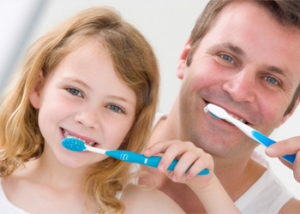
When kids have two homes their regular routines can often go out the window; one parent may well be more likely to allow more TV time than the other, for example, or prefer eating out to cooking at home. However one routine that it’s important doesn’t get lost during the change-over process is teeth cleaning and good oral hygiene, particularly amongst younger children. The noticeable long term habits of having a good teeth cleaning routine mean it’s worth the effort of establishing good habits now, even if your children are reluctant. Here are some hints and tips for encouraging good oral hygiene, and helping your kids form healthy dental habits that will last a lifetime:

Provide Help and Support

Many parents believe that simply providing access to a toothbrush and toothpaste is enough to encourage good oral hygiene habits, but in reality you need to be much more involved than that. Dental experts recommend that you should physically brush and floss your child’s teeth for them until they are at least six years old (and have the coordination skills to competently and consistently tie their own shoe laces). You should clean their teeth for them for at least two minutes every morning before breakfast and every evening before bedtime, using a fluoride based toothpaste and an age appropriate tooth brush. Once you have cleaned their teeth for them, encourage your child to then brush their teeth independently for another minute: this will build their confidence and encourage them to develop the skills they will need when they are old enough to brush their teeth independently. Once your child is over the age of six you should still supervise their teeth cleaning, to ensure they are brushing regularly and with good technique

Have Everything You Need in Your Home

When kids are switching from one home to the other it’s easy for things to be left behind, however if they forget their toothbrush this could give them the excuse their looking for to have an extended break from teeth cleaning. Given the equipment needed for good dental practice is so inexpensive, why not have everything they need permanently in your home? Buy them a tooth brush, tooth paste, and dental floss that they have constant access to. Why not take them shopping and let them choose their own? Toothbrushes are now available in a wide range of colours, designs, and even featuring their favourite cartoon characters, which could help to make teeth cleaning time a little more fun.

Model Good Habits

Children learn their behaviours by watching their parents and modelling on them, so it’s important to practice what you preach. Clean your teeth thoroughly morning and night, and take care of your smile. Why not clean your teeth at the same time as your child’s, so that you can form the healthy habit together?  Whilst regular dentist visits can be expensive, particularly if you don’t have dental coverage, it’s important that you visit the dentist regularly and that you take your child to the dentist regularly too. Dentist trips are no fun for anyone, and your child is likely to be reluctant and apprehensive, but it is the best way of ensuring your child better understands the importance of taking care of their teeth, and of dealing with any dental problems as soon as they arise.

 Talk About What Will Happen If They Don’t Brush

It can be difficult to deal with a reluctant tooth brusher, and most parents don’t relish the thought of having to hold down their distressed child so they can brush their teeth, so finding other strategies to encourage good oral hygiene is preferable. Talk to your child about cavities and tooth decay, explaining how germs will affect their smile and that once teeth have been damaged by decay they cannot be repaired: if your child is a visual learner then showing them some images of damaged smiles and decayed teeth online might well help to drive your message home. Good oral hygiene is a lifelong habit that needs to be formed as soon as possible, so it’s important to use whatever tools you have in your armoury to get your child brushing every day.

Managing depression whilst studying

Depression gets a bad rap for a lot of things, which to be fair is pretty reasonable because living with depression is pretty shit. Especially when it comes to exam time, and everyone seems to be bragging about how much study they’ve done, and you can’t even get the energy to make a study plan. This can be ten times worse for repeat exams, as everyone is out enjoying the summer, and you’re at home just staring at your laptop and praying for motivation to fall from somewhere.

Depression plays havoc with your concentration levels, affecting your focus, memory and the ability to sit still and pay attention to something for more than 5 minutes. Or at least, that’s how I find it. Sometimes I get bursts of motivation and I can bring myself to study for a decent half hour, but even then it isn’t easy. Making revision plans doesn’t work, trying to avoid distractions is just a ridiculous suggestion and time is pretty hard to manage because depression is hard to manage, and it doesn’t always abide by time schedules or deadlines.

I used to be really good at studying, I love learning and since I’ve become affected by depression, the thing I’ve struggled with most is not being able to study. I feel lazy, and ungrateful, and despite how hard I worked to get into college in the first place, I feel like by not being able to study, I’m wasting my college place, and all the money that has been spent on it. Depression affects your ability to enjoy the things you used to love doing, so it’s blatantly obvious that it’ll do even more to the things that you know you have to do, but you might not enjoy. Due to this, I don’t enjoy a lot of stuff that I used to do, so when I find things I like, I tend to do them instead of studying. Procrastination is a massive part of my life, and I have wasted so many hours watching Geordie Shore and H2O: Just Add Water, instead of sitting down and going over notes.

I’m repeating exams that I failed because I was in a rough enough place when I took them, and I just didn’t have the spare energy to study, and now I’m back in the same situation. I think there’s a massive amount of pressure on people to go to university and graduate with a decent degree, and when people fail exams, the typical response is “Get your head down, and cop on”. It’s hard for people to understand living with depression if they have never had to, and so some people don’t get how difficult it can be for people with mental illnesses to actually “get their head down”. Studying is hard for most people, and exams are a rough time for everyone, so with added pressure, it’s ten times worse.

Sometimes I wish I could just be accepted into next year without having to study, because I love my degree, and I wouldn’t be able to afford repeating the year. I know I’m not the only one struggling, and I would love it if we were all a bit more honest on social media. It’s natural for us all to compare what we see on Facebook, where people show off their best sides, but every once in a while it would be nice to see some honesty, especially when it comes to things that most of us will deal with. I’m very open about my struggles with anxiety, but sometimes I’m almost embarrassed to talk about my depression, which is ridiculous.

It’s healthy to talk, and many people in Australia suffer from depression, so you won’t be the only one talking.

We have some of the highest suicide rates in the world. The conversation has been repeated so many times, and we made some incredible strides fighting against the mental health cuts in the budget this year, but we need to do more. As difficult as it is, I think we need to talk more about our feelings. It’s even harder for guys to talk about their feelings because of the ridiculous stereotypes surrounding masculinity and emotions. Suicide rates in young men between ages 18 and 24 is 3 times higher than females. Having depression, or other mental health problems are not something to be ashamed of. If you don’t have any mental health problems, that doesn’t make you any less entitled to speak up if you’re having a bad day. It can sometimes be totally isolating, and you deserve to have someone to talk to.

There are many supports for mental health problems in universities, so if you’re struggling with your repeat exams, or any exams at all, don’t be afraid to message your welfare officer and see what help you can avail of. Don’t suffer in silence during exams, and even if you can’t study, you can try to make things a little bit easier on yourself. You deserve it!

Thank you to Rebekah Humphries for her article 🙂

Some Dads are not waking up to their children this Christmas

Sadly, I know too many people to whom this applies (including myself once). I have cried with memories of what this time used to be for me and how it was filled with such love and happiness – for some dads times like these bring back memories of the reality of emptiness and sadness.

So I would like to remind you that there are people for whatever reason are not looking forward to Christmas.
Some people are not surrounded by wonderful families or wake up to their children on Christmas morning (we used to but life has changed).
Some have problems during the holidays and are overcome with great sadness when we think about our sons or daughters who are not with us.

This also applies to the elderly who find them-self without their children, family or friends. And, many of these people are besieged by loneliness. They all need caring and our loving thoughts right now.

To all those who have family problems, are elderly and alone, having health struggles, job issues or worries of any kind and just need to know that someone cares – we do and our hearts and thoughts are with you.

Take care & best wishes xx

If you find yourself overwhelmed with feelings of sadness or loneliness, please call Lifeline on 13 11 14 you don’t need to be alone.

Becoming a new parent or DAD again

Being a parent for the first time is exciting but it comes with responsibilities and part of that responsibility is making sure your child grows up in a safe yet still stimulating environment so they can develop to their maximum potential. One of the best ways to ensure safety is to take time every few weeks, to view our home from your child’s perspective. To that end, you might like to get down on their level, literally! Start crawling around your home to see where potential dangers might be – it’s amazing what you come across on the floor, including dropped medication, sharp corners and unplugged electrical sockets- accidents waiting to happen! Below is a step by step guide on how to childproof your home depending on child’s age, development and needs.

The New Born Stage

When you bring your newborn home from hospital, it is a “getting to know each another phase” for you all. The baby’s room, or nursery is the first room to organise and have ready, when your baby arrives! First up, never, ever leave a baby alone without parental supervision. It’s as simple as that. Make sure your child is within earshot when they are sleeping. Another piece of invaluable advice is to not over fold baby blankets when they are sleeping and resting – they can overheat quickly that way.

The Baby Stage

blind-cord-wind-upsSeek out danger and take preventative measures to ensure your young children are safe at home, every day. An investment in blind cord wind-ups or wraps (pictured) from the beginning is very worthwhile, and are easily installed (a perfect “dad” job). On a serious note, they keep blind cords out of the reach of babies in their cots and from older siblings in general. Over-long cords can lead to strangulation. And remember to move cots and beds away from windows and window fittings whenever possible.


Night time

For night time action, a night light is good to have on, one that is not too bright, so you can keep an eye on your sleeping baby, it is also very handy for all those middle of the night feeds, changes and daddy cuddles too!

The Waddler and Toddler Stage

powerpoint-coversAs your baby grows and becomes more mobile (and curious), safety around the home is impetrative! Key rooms to keep safe are the kitchen and living areas. A good job for all new dads is to ensure your house is ready for your baby when he/she becomes mobile. Young babies and children are very inquisitive and learn through repeated observation. Invest in a few child safety locks. By using a variety of different locks and latches that work in different ways, it becomes harder for young children to work out how to open them. Also, make sure you have the right lock or latch for each cupboard depending on the type of handle. Dreambaby® have a huge range of locks and latches to suit your home and needs. Remember to cover all power points around you home too!

Bathroom Safety

In the bathroom ensure your bath tub is non-slippery, and there is a suitable baby bath to assist with bathing of your baby. Always keep medicines out of the way of babies by keeping them up high in secured cupboards. Other necessities to have on hand are medicine droppers, a rapid response digital thermometer and last but not least, make sure baby’s nails are kept short. Use baby scissors or clippers (don’t tear nails or bite them off even if they are very soft). Babies often put their hands up to their faces and can scratch their corneas and cut their faces if their nails are overly long.

Equipment and Baby Investments

Make sure all your baby equipment, furniture including your cot and pram, meet government and industry standards. Try not to buy second hand if you can, as it is never easy to gage the wear and tear on items. Also check to see if screws are tightly secured, both when you set up equipment, and afterwards as things loosen along the way. For instance, safety gates need adjusting on a regular basis.

There is so much information available for new parents, it can be a very fast learning curve!

Enjoy these early years as a new dad, as everting will tell you, they grow up fast and it will all too soon, be a distant memory!

For further advise and tips, a visit to your Early Childhood Centre is a good start. Your GP and Paediatrician are also invaluable when it comes to questions about baby’s safety, healthy wellbeing. Also check out the Kidsafe website for general safety information and of course visit the Dreambaby® website for safety product suggestions and solutions or call (02) 9386 4000. And be part of the safety conversation: Dreambaby Safety Facebook page. For useful safety tips & advice from Dreambaby®, check out DreambabyTV