
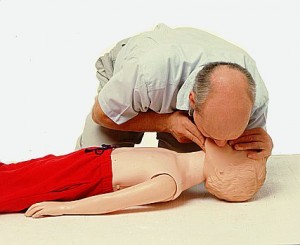
 Knowing the basics of performing CPR can be the difference between life or death. It could be a friend or heaven forbid your child! Being able to jump in and help can keep blood flowing through their body and keep vital organs alive whilst the ambulance is on the way. I remember watching a women pull her child from the river in Merimbula NSW and she just didn’t know what to do and stood there crying? I was young and thought just DO something DO something! Luckily a person nearby jumped in and started mouth to mouth and CPR while we waited for the ambulance.
CPR (or cardiopulmonary resuscitation) is a combination of chest compressions and rescue breathing (mouth-to-mouth resuscitation). If someone isn’t circulating blood or breathing adequately, CPR can restore circulation of oxygen-rich blood to the brain. Without oxygen, permanent brain damage or death can occur in less than 8 minutes.
CPR might be necessary in many different emergencies, including accidents, near-drowning, suffocation, poisoning, smoke inhalation, electrocution injuries, and suspected sudden infant death syndrome (SIDS).
Reading about CPR and learning when it’s needed will give you a basic understanding of the concept and procedure, but it’s strongly recommended that you learn the details of how to perform CPR by taking a course. If CPR is needed, using the correct technique will give someone the best chance of survival.
CPR is most successful when started as quickly as possible, but you must first determine if it’s necessary. It should only be performed when a person isn’t breathing or circulating blood adequately.
First, determine that it’s safe to approach the person in trouble. For instance, if someone was injured in an accident on a busy highway, you’d have to be extremely careful about ongoing traffic as you try to help. Or if someone touched an exposed wire and was electrocuted, you’d have to be certain that he or she is no longer in contact with electricity before offering assistance to prevent becoming electrocuted yourself. (For instance, turn off the source of electricity, such as a light switch or a circuit breaker.)
Once you know that you can safely approach someone who needs help, quickly evaluate whether the person is responsive. Look for things such as eye opening, sounds from the mouth, chest movement, or other signs of life such as movement of the arms and legs.
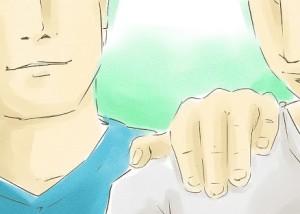
In infants and younger kids, rubbing the chest (over the breastbone) can help determine if there is any level of responsiveness. In older kids and adults, this also can be done by gently tapping the shoulders and asking if they’re all right.
Whenever CPR is needed, remember to call for 000. Current CPR courses teach you that if you are alone with an unresponsive infant or child, you should perform CPR for about 2 minutes before calling for help.
Three Parts of CPR
The three basic parts of CPR are easily remembered as “CAB”: C for compressions, A for airway, and B for breathing.
- C is for compressions. Chest compressions can sometimes restore the flow of blood to the heart, brain, and other organs. CPR begins with 30 chest compressions, followed by two rescue breaths. This cycle is immediately repeated and continued until the child recovers or help arrives. It is not necessary to check for signs of circulation to perform this technique. Rescuers doing compressions should “push hard, fast, and in the center of the chest.” A CPR course will teach you how to perform chest compressions in infants, kids, and adults, and how to coordinate the compressions with rescue breathing.
- A is for airway. After 30 compressions have been completed, the victim’s airway must be open for breathing to be restored. The airway may be blocked by the tongue when someone loses consciousness or may be obstructed by food or another foreign object .In a CPR course, participants learn how to open the airway and position the person so the airway is ready for rescue breathing. The course will include what to do to clear the airway if you believe an infant or child has choked and the airway is blocked.
- B is for breathing. Rescue breathing is begun after 30 compressions have been completed and the airway is open. Someone performing rescue breathing essentially breathes for the victim by forcing air into the lungs. This procedure includes breathing into the victim’s mouth at correct intervals and checking for signs of life. A CPR course will review correct techniques and procedures for rescuers to position themselves to give mouth-to-mouth resuscitation to infants, kids, and adults.
Australian Red Cross and St Johns Ambulance all conduct courses around Australia and teach the latest techniques. They normally include general first aid training such as what to do when someone is choking?, burnt, stopped breathing, has a broken limb or faints.
 In this contemporary setting a father has an equal role in parenting his children and in many cases is the primary or sole carer. Dads are striving to be better role models in their sons and daughters lives but don’t necessarily have the confidence or the skill to handle all the issues that arise.
 Everyone of us has a story to tell. Our life is unique to us and our journey, experiences, feelings and memories to date have carved us into who we are today. These experiences can be shared with our children in a creative way. Below are many questions that often don’t get asked, you can go a lifetime and your children will not know the answers to any of these insights into your lifetime.
 There is very little I can think of that gives you the same buzz that you get from giving your time to help others and making the community a better place.
 Watching Dr Phil the other day I listened to how a girl was out drinking with a group of “so called friends” boys, they all got drunk and she was gang raped.
 Bunnings have quiet a few children’s activity classes for kids over the age of 5 and you must accompany them. It would be worth checking out your nearest store for their times and taking your child along to make something for their mum. You can see
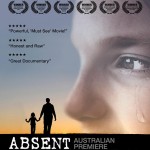 Filmmaker Justin Hunt will be joined by musician-composer James Hetfield in presenting and discussing the award-winning documentary Absent, exploring the worldwide crisis of absent and disengaged fathers and the negative impact that the “father wound” makes on society.
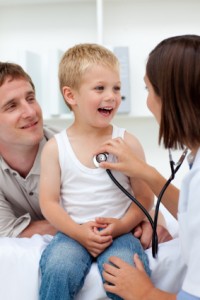 Divorce changes a lot of things in your family unit, but it does not change one of the major goals that parents often desire to achieve: the ability to raise your children in a way that puts their mental, emotional, and physical health first. Before your divorce, you and your spouse worked as a single unit to protect and provide for your children. Now you must work as separate units, all-be separate units that agree at times, to care for your children.
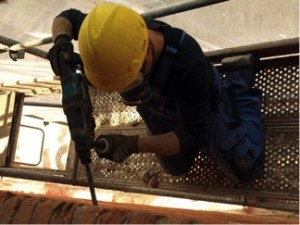 Getting your first part time job is a proud moment in anyone’s life, and this will be no different for your teen.
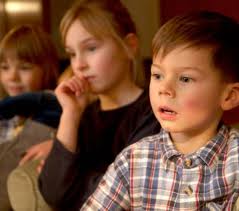 News gleaned from the TV, radio, or Internet can be a positive educational experience for kids. But when the images presented are violent or the stories touch on disturbing topics, problems can arise.









Recent comments